
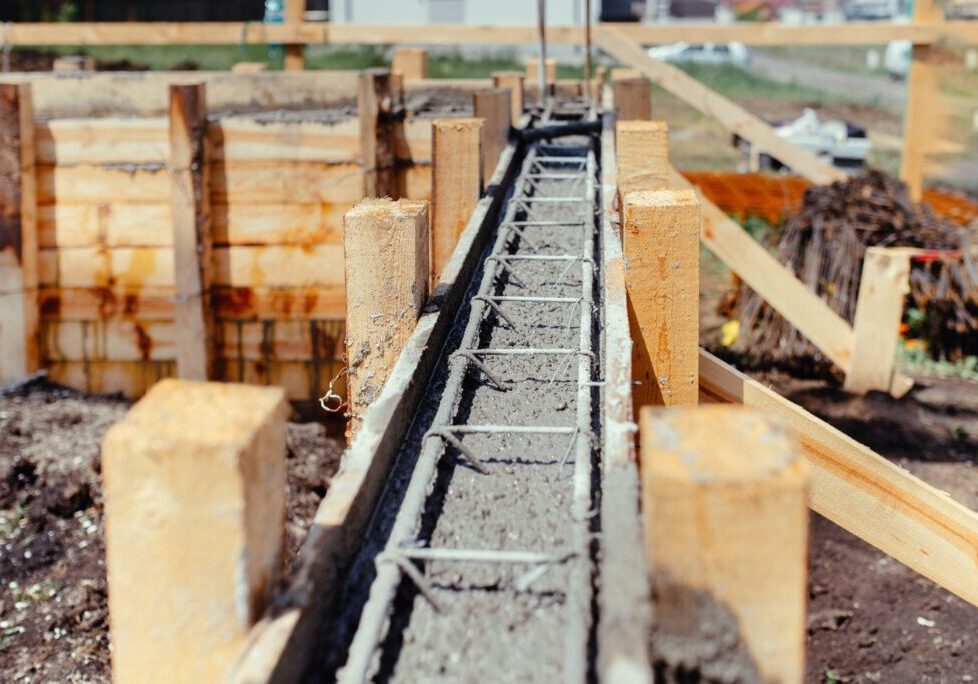
Reusable formwork usually makes more sense when the structure repeats enough to spread setup time, handling, and system cost across multiple pours. Traditional plywood formwork usually makes more sense when the geometry is irregular, the scope is short, or the crew needs more freedom to adapt in the field. If you want to compare those options properly, start with a formwork contractor who can look at sequence, access, and pour rhythm rather than treating the decision as a simple materials question.
For builders, PMs, estimators, and supers, the real question is not which system sounds more advanced. The real question is which system fits this job, this crew, and this site. A reusable system can lose its advantage on a constrained site with limited laydown or crane time. A plywood approach can lose its advantage when repeated walls, cores, or slab edges keep forcing the same labour over and over again.
Reusable Formwork Vs Traditional Plywood Formwork At A Glance
At a high level, reusable formwork usually wins on repetition, cycle speed, and consistency. Traditional plywood formwork usually wins on custom geometry, one-off details, and field flexibility. Neither system is automatically better. The best fit depends on how much of the work repeats, how the site operates, and how disciplined the crew is in execution.
| Factor | Reusable Formwork | Traditional Plywood Formwork | Usually Best For |
| Repeated Pours | Strong fit | Less efficient over many repeats | Reusable |
| One-Off Geometry | Can be awkward | Strong fit | Plywood |
| Upfront Cost | Higher initial commitment | Lower initial commitment | Plywood on short runs |
| Labour Efficiency | Improves with repetition | More site-built labour | Reusable on repeat work |
| Field Flexibility | Lower | Higher | Plywood |
| Finish Consistency | Often more repeatable | Depends heavily on crew and build quality | Reusable on repeated faces |
| Waste | Lower when reuse is real | Higher when materials are cut and discarded | Reusable |
| Crane And Staging Dependence | Often higher | Sometimes lower | Depends on site |
Bottom line, reusable formwork is strongest when the project has enough repeated work to reward planning discipline. Traditional plywood formwork is strongest when the project needs custom thinking in the field. Many builders get the best result by mixing both instead of forcing the whole job into one approach.
What Each System Really Means On Site
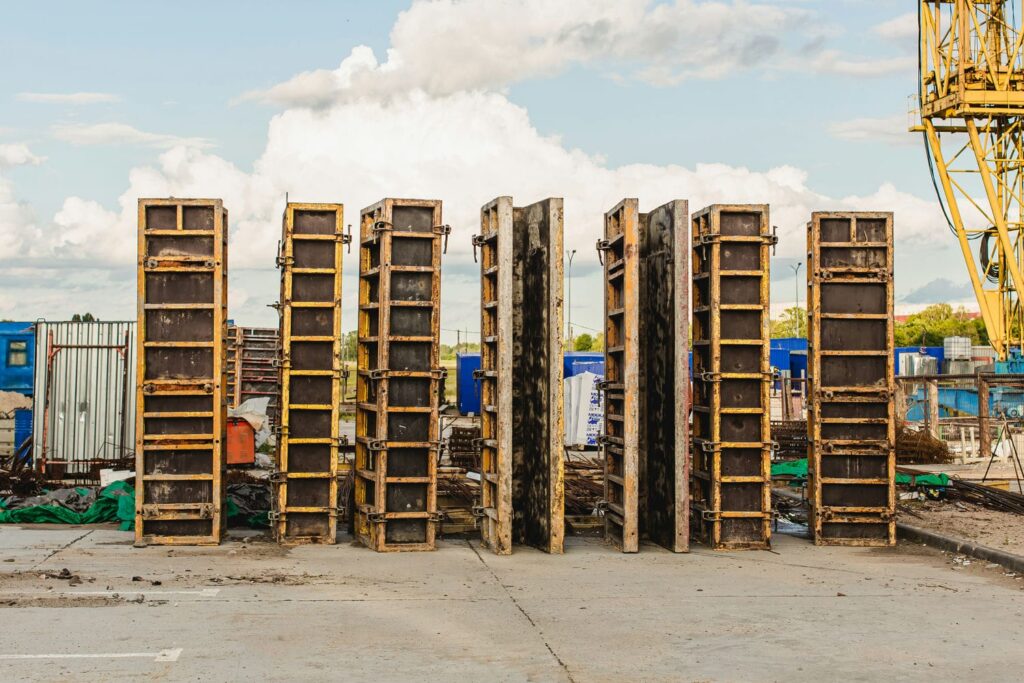
On paper, this comparison can sound simple. On site, it rarely is. The difference is not just reusable panels versus plywood sheets. The difference is how the crew builds, cycles, moves, adjusts, and protects the forming system as the work progresses.
That is why smart comparisons start with site conditions and repeatability. If the system choice does not suit the structure or the site, the estimated advantage usually disappears in labour, delay, handling, and rework.
What Reusable Formwork Usually Means
Reusable formwork usually means an engineered panel or assembly that is meant to be erected, stripped, moved, and reused across multiple pours. The real benefit is not that the material looks more “systemized.” The real benefit is that repeated structural elements can be formed with more rhythm and more predictability once the crew gets into cycle.
That rhythm matters on repeated walls, slabs, columns, shear walls, and core work. When the layout stays consistent, reusable assemblies can reduce re-measuring, reduce repeated cutting, and support a cleaner handoff from one pour to the next. The more the structure repeats, the more that discipline tends to pay back.
What Traditional Plywood Formwork Usually Means
Traditional plywood formwork usually means more site-built forming, more custom cutting, and more freedom to shape the work to suit irregular conditions. That does not make it less professional. In many cases, it makes it the smarter choice because the crew can respond quickly to offsets, steps, changes, and one-off geometry without trying to force a standard panel into a custom condition.
This flexibility is one of plywood’s biggest strengths. If the work includes unusual transitions, changing details, small runs, or limited repeat value, plywood often lets the crew solve the right problem without overcommitting to a system that was designed for repetition rather than variation.
Why Many Jobs Use A Hybrid Approach
Many projects do not fall cleanly into one camp. Repeated walls or slab edges may suit reusable panels, while corners, stair conditions, transfer areas, odd penetrations, or one-off transitions still make more sense in plywood. A hybrid approach often respects the structure better than a rigid all-or-nothing decision.
That is also where experienced site leadership matters most. The strongest plan is often the one that uses reusable formwork where the job can truly capitalize on it, then switches to plywood where flexibility protects labour and fit. That is not compromise. It is usually better execution.
When Reusable Formwork Makes More Sense
Reusable formwork becomes more attractive as repetition increases and the site can support the cycle. The system does not create value just because it exists. It creates value when the project has the right mix of repeated layout, predictable sequence, and crew discipline to use it well.
This is why a good comparison always looks beyond the first pour. The decision should be judged across the full concrete package, not just the first time the forms hit the structure.
Repeated Layouts And Multi-Pour Cycles
If the project has repeating walls, slabs, columns, or core conditions across multiple levels, reusable formwork usually becomes easier to justify. Setup effort and handling only make sense when the same system keeps coming back into use. On repetitive work, the benefit is not only material reuse. It is fewer fresh decisions every cycle.
That repeat value is what separates a true reusable-formwork opportunity from a job that only looks repetitive at first glance. A building may seem regular in plan, but repeated embeds, edge changes, offsets, and coordination issues can reduce the actual cycle benefit. The decision should be based on real repeat conditions, not a quick first impression.
Faster Cycle Times On Planned Sequences
Reusable systems often support faster, more predictable cycle times when the pour sequence is planned properly. Once the crew knows the pattern, the work can move with less site-built improvisation and fewer one-off rebuilds. That matters most when the builder is protecting a concrete schedule that drives following trades.
However, faster in theory is not the same as faster in practice. If the site has poor access, weak staging, or interruptions that break the cycle, the reusable advantage can flatten out quickly. The system only helps when the sequence around it is organized enough to let it work.
More Consistent Finish Across Repeated Elements
Where the project has visible repeated concrete, reusable formwork can help produce more consistent faces from one pour to the next. Repeated tie patterns, repeated lines, and repeated geometry often read more evenly when the same system is used with care over multiple cycles. That can matter on exposed or semi-exposed concrete where inconsistency turns into patching and appearance disputes later.
That does not mean reusable formwork guarantees a better finish. It means it can support more repeatable outcomes when the structure repeats and the crew handles the system properly. Consistency comes from planning and execution first, then the system helps reinforce it.
Lower Waste Across Repeat Use
Reusable systems can reduce waste when the same assemblies are used enough times to make reuse real rather than theoretical. That can matter on bigger concrete scopes where repeated cutting and disposal would otherwise keep accumulating across the schedule.
The practical value here is not only environmental. It is operational. Less throwaway material can mean less clutter, more predictable staging, and fewer repeated material decisions on every cycle. On repeat-heavy work, that efficiency can quietly support the whole site.
When Traditional Plywood Formwork Makes More Sense
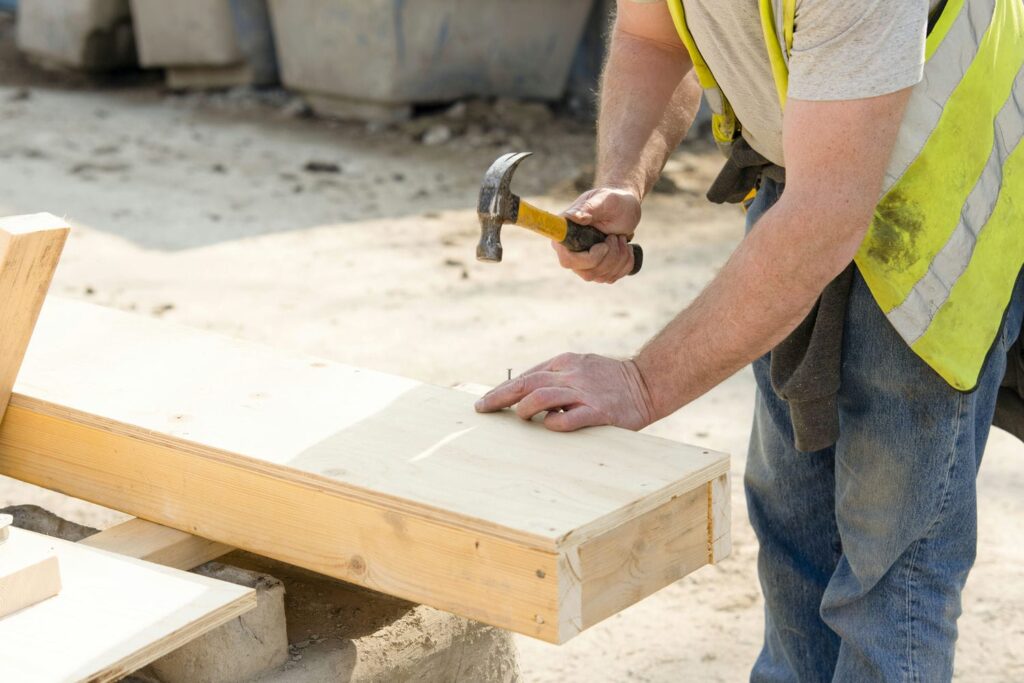
Traditional plywood formwork stays relevant because many jobs still need flexibility more than repetition. It remains a practical choice on custom geometry, short runs, late changes, and conditions where the crew needs to solve problems directly in the field.
That is why plywood should not be framed as a fallback option. On the right scope, it is simply the better tool.
Irregular Geometry And One-Off Details
When the structure includes unusual angles, custom transitions, stepped conditions, offsets, non-repeating walls, or one-time features, plywood often gives the crew a faster path to a clean solution. Instead of forcing the geometry to suit the panel, the crew can shape the formwork to suit the actual structure.
This matters most on details that break system rhythm. Stairs, landings, odd corners, pockets, and transition zones often look manageable on paper, then consume time when they do not fit a standardized forming pattern. Plywood usually handles that reality more gracefully.
Smaller Volumes Or Short-Duration Work
Some projects simply do not have enough repeated work to support a reusable system. If the run is short, the structure is varied, or the concrete scope is limited, the setup and handling logic behind reusable formwork may never get enough cycles to pay back.
In those cases, plywood often gives the builder a cleaner cost structure. The crew can build what the job needs without carrying a larger system commitment than the scope can justify. That is often the smarter commercial decision, even if reusable formwork sounds stronger in general conversation.
Late Design Changes And Field Adjustments
Plywood tends to be more forgiving when the design is still moving or the field conditions are not fully stable. If changes are likely, it is often easier to adapt site-built formwork than to revise a repeat system that depends on tighter consistency from pour to pour.
That flexibility can protect schedule as much as labour. A crew that can adjust quickly in the field may save more time overall than a crew trying to preserve a reusable cycle that no longer matches the work in front of them.
Sites Where Staging Or Crane Rhythm Limits Panel Efficiency
A reusable system can look very strong in estimating and still underperform on site if access, crane availability, laydown, or movement paths are tight. If the crew spends too much time waiting on picks, repositioning panels, or protecting components in limited space, the cycle advantage can fade.
That is why site logistics must sit inside the comparison from the start. A good forming plan is not only about the structure. It is also about how the crew and equipment move around it without creating delay.
Cost Comparison Beyond Material Price
Material price alone rarely answers this question. Builders who compare only the cost of plywood against the cost of a reusable system usually miss the bigger drivers: labour hours, handling, crane pressure, repair, sequence, and how often the same work repeats.
The better question is simple: which option gives the lowest installed cost with the least schedule friction for this job?
Upfront System Cost Vs Total Labour Cost
Reusable formwork often comes with more upfront commitment, whether that shows up in rental structure, procurement, setup effort, or planning. That can look expensive early. But on repeated work, total labour can fall enough to make the full package more competitive over time.
Plywood often looks lighter upfront because the crew can build to the immediate need. On shorter or more custom scopes, that may remain the better answer all the way through. The mistake is assuming that low upfront cost automatically means low total cost. On repeated work, it often does not.
Crane Time, Handling, Storage, And Transport
System choice changes how the site uses lifting, storage, and movement. Reusable formwork can reduce certain field-build tasks while increasing dependence on crane coordination, panel storage, and careful handling. If the site has room and rhythm, that can work well. If it does not, the same system can become harder to manage than expected.
Plywood also carries handling and storage needs, but the rhythm is different. It is often easier to stage in smaller pieces and adapt locally, though that flexibility may come with more labour and more cut material. This is why logistics should be priced into the decision, not treated as a side issue.
Repair, Damage, Cleanup, And Reuse Discipline
Reusable systems only perform well when the crew protects and resets them properly. Damage, poor storage, weak cleaning, or sloppy handling can erode the value quickly. The system may still be reusable in name, but its actual performance can slide if the discipline around it is weak.
Plywood has its own version of this problem. Repeated patching, inconsistent build quality, and material waste can slowly push cost up, especially when the crew keeps solving similar conditions from scratch. In both systems, execution discipline is part of the cost.
Where The Break-Even Point Usually Shifts
The break-even point usually moves with repetition. As repeat volume rises, reusable formwork tends to become stronger because the same effort keeps producing value over more cycles. As repeat volume falls and custom conditions rise, plywood tends to become stronger because the crew can solve the work directly without carrying a broader system.
There is no single universal threshold that applies to every project. The right call depends on geometry, access, crane use, labour availability, finish expectations, and how steadily the sequence can hold. That is why the comparison should stay project-specific.
Finish Quality, Tolerances, And Rework Risk
Finish quality matters more on some projects than others, but it is always part of the equation. Even where the concrete will not remain exposed, inconsistent forming can still create extra patching, labour, and coordination work downstream.
The goal is not perfection for its own sake. The goal is choosing the system that gives the builder a dependable result without avoidable rework.
Surface Consistency And Repeat Accuracy
Reusable formwork can help support more consistent surfaces on repeated work because the same assembly returns again and again. If the system is set well and handled well, repeated lines and repeated faces often read more evenly across the structure.
That consistency becomes especially useful where repeated elements stay visible or where uneven forming work would create extra finishing and correction later. The benefit is not cosmetic alone. It can also reduce the amount of explanation and patching required after the pour.
Where Plywood Still Performs Well
Plywood can still produce very good results when a skilled crew is building clean custom forms for conditions that do not suit a reusable system. On one-off geometry, the ability to shape the form directly to the structure can be more important than the repeat accuracy of a panel system.
The quality difference is often less about plywood versus reusable and more about fit between the system and the scope. A well-executed plywood solution is stronger than a poorly matched reusable solution every time.
Which System Better Fits The Finish Expectations Of The Job
The right finish choice depends on what the concrete needs to do visually and how much variation the job can tolerate. If repeated visible elements need to read consistently, reusable formwork may support that goal better. If the concrete is full of custom conditions, plywood may deliver a cleaner result because it suits the geometry better.
This is where the comparison needs honesty. Do not choose reusable formwork only because it sounds more efficient, and do not choose plywood only because it feels more familiar. Match the system to the finish expectation, then match the crew to the system.
Safety, Engineering, And Temporary Works Planning

Formwork is not only a productivity decision. It is also a temporary works decision. That means the conversation has to include engineering, supervision, inspection, and how the supporting strategy is coordinated around the formwork itself.
This is one of the biggest reasons builders benefit from making the system choice early. A late decision can put planning, drawings, and site coordination under unnecessary pressure.
System Choice Is Also A Planning Choice
In BC, specified cast-in-place formwork triggers more than a material decision. The Occupational Health and Safety Regulation says worksite-specific plans are required for listed types of formwork and associated falsework or reshoring, including ganged forms, formwork over 4 m high, suspended forms for beams, slabs, stairs and landings, cantilever forms, and other listed cases. The same section requires professional engineer certification of those plans, up-to-date plans at the worksite, and erection, use, and dismantling in accordance with those certified plans.
The regulation also requires a qualified supervisor to oversee erection, use, and dismantling, and it requires inspections immediately before concrete placement or other intended loading of specified formwork and associated falsework or reshoring. That is why reusable versus plywood is partly a planning question. The system can change what drawings, inspections, and coordination steps the team needs to carry properly.
Shoring, Reshoring, And Falsework Still Need To Be Coordinated
Changing the form face or panel strategy does not remove the need to think through the support strategy below it. Loads still need a safe path, and the timing of stripping, reshoring, reuse, and sequencing still has to align with the structure and the worksite plan. Knowing the differences between shoring, reshoring, and falsework matters here, because each one carries different timing, load, and coordination obligations across a concrete schedule.
A builder can make a good decision on reusable versus plywood and still run into trouble if the supporting temporary works strategy is vague. The best comparisons account for both, because the formwork system and the support system are closely tied in the field.
Crew Experience Matters As Much As The Panel System
A good system in the wrong hands will still create waste, delay, and rework. Reusable formwork rewards crews who can plan, protect, cycle, and inspect the system properly. Plywood rewards crews who can read geometry, build accurately, and adapt without losing consistency.
That is why site leadership matters so much. The formwork choice should suit the crew’s real strengths, not just the estimator’s preferred option. Good teams do not just build forms. They manage sequence, coordination, and predictable execution around them.
Questions Builders Should Ask Before Choosing A Formwork System
Most comparison mistakes happen before the first form is built. A team makes an early assumption, then spends the rest of the project trying to force the work to match it. A better approach is to ask a few direct questions that expose whether the job really supports reuse, really needs flexibility, or really wants both.
These questions also help align estimating with site reality. That gap is where many avoidable concrete headaches begin.
How Much Repetition Is Actually In The Job?
Look beyond the basic floor plate and ask what truly repeats. Are the walls, columns, slab edges, and openings genuinely consistent, or do small changes keep breaking the cycle? A job can appear repetitive until embeds, offsets, transfer conditions, or sequence changes start interrupting the pattern.
That is why repetition should be measured honestly. Reusable formwork gets stronger when the repeat value is real, not assumed. If the repeat conditions keep changing, the value of a flexible plywood approach may hold up better than expected.
How Custom Is The Geometry?
Identify where the job breaks standard rhythm. Stairs, landings, corners, battered forms, one-sided conditions, recessed details, irregular walls, and transition zones often decide whether a reusable system will fit cleanly or need too much workaround.
This question matters because the awkward areas do not just affect those areas. They can slow the whole sequence if the crew keeps stopping the reusable cycle to solve custom geometry anyway.
What Do Access, Laydown, And Crane Time Look Like?
A system that works beautifully on an open site may struggle on a tight one. Ask where panels or materials will be staged, how they will move, what lifting windows are available, and whether the crane rhythm actually supports the forming plan.
This question often changes the answer faster than a material comparison does. The cleaner the site logistics, the stronger reusable formwork tends to become. The tighter the site logistics, the more valuable plywood flexibility can become.
Does The Crew Have Experience With The Chosen System?
System choice should reflect crew capability, not just preference. A reusable approach only helps if the team can cycle it efficiently. A plywood approach only helps if the team can build accurately and consistently without turning every custom detail into excessive labour.
This is also why trade selection matters upstream. Knowing how to prequalify a carpentry subcontractor helps builders screen for planning discipline, site leadership, and execution quality before a formwork issue turns into a schedule problem.
Is A Hybrid Approach The Better Answer?
In many cases, yes. A hybrid plan often gives the builder the best balance by using reusable systems where repetition is strong and plywood where the geometry becomes custom or irregular. That keeps the system working with the job instead of against it.
There is no prize for choosing only one method if the structure does not support that decision. The better outcome is the one that reduces friction, protects schedule, and gives the crew the right tool in each part of the scope.
How Madera Thinks About The Right Formwork System

We do not start with the assumption that one system is always better. We start with the structure, the repeat value, the access plan, and the sequence. That keeps the conversation practical and helps builders make a decision that fits real site conditions instead of a generic rule.
The best formwork decisions usually feel simple by the time work starts. They get there because the planning was honest early, not because the site solved everything later.
Start With Repetition, Access, And Sequence
We first look at what truly repeats, how the crew will move, what the lifting rhythm looks like, and where the custom conditions sit. That tells you quickly whether reusable formwork is likely to keep gaining value as the job moves, or whether plywood flexibility will protect labour and schedule better.
This early review also helps clarify what should be standardized and what should stay custom. When that split is made early, the whole concrete package tends to run with less friction.
Match The System To Crew Capability And Site Conditions
A good plan has to fit both the job and the team. Madera Projects brings Red Seal carpenter oversight, reliable crews with strong onsite leadership, and clear scopes before work begins so the system choice stays tied to execution, not guesswork.
That matters because formwork success is not only about what is drawn. It is about how consistently the work is built, checked, moved, and handed off on site. Strong supervision and a clean scope usually reduce the kinds of avoidable problems that slow concrete work down.
Reduce Rework By Planning The System Early
Early planning reduces rework because it exposes the awkward conditions before the crew is forced to solve them under pressure. It also improves coordination between structure, temporary works, lifting, and site flow so fewer surprises show up during active pours.
That same thinking shapes our process, which focuses on clear scopes, organized execution, proactive communication, and progress visibility so builders can make decisions earlier and close loops faster once the work is underway.
Choosing The Right Formwork System For Your Project
Reusable formwork is not automatically the better answer, and traditional plywood formwork is not automatically the cheaper one. The right choice depends on repetition, geometry, access, crew capability, and how the site will actually operate once the concrete work starts. When those factors are aligned early, the formwork plan tends to be smoother, more predictable, and easier to manage from one pour to the next.
Madera Projects helps builders make that call with Red Seal carpenter oversight, reliable crews, strong onsite leadership, clear scopes before work begins, and proactive communication as work moves. If you want to compare system options inside a broader structural plan, our concrete formwork services cover the full service context.
Frequently Asked Questions
What Is The Main Difference Between Reusable Formwork And Traditional Plywood Formwork?
Reusable formwork is built around repetition. It is meant to be cycled across multiple pours so the setup and handling effort keeps producing value. Traditional plywood formwork is more adaptable in the field and often suits custom geometry, smaller runs, and one-off details better.
Is Reusable Formwork Always Cheaper Than Plywood?
No. Reusable formwork is usually more cost-effective only when the project has enough repetition to spread setup, handling, and system cost across multiple pours. On short or irregular scopes, plywood may remain the better value.
When Does Traditional Plywood Formwork Make More Sense?
Traditional plywood formwork usually makes more sense when the job includes irregular geometry, likely field changes, limited repetition, or site conditions that reduce the efficiency of reusable panels. It is often the stronger choice when flexibility matters more than cycle repetition.
Does Reusable Formwork Give A Better Concrete Finish?
It can help support more consistent results on repeated work, especially where the same faces and lines are formed again and again. But finish quality still depends heavily on planning, crew capability, handling, and how well the system fits the scope.
Can One Project Use Both Reusable And Plywood Formwork?
Yes. Many projects get the best result from a hybrid plan. Reusable systems often handle repeated work well, while plywood handles custom corners, transitions, stairs, offsets, and other one-off conditions more efficiently.
How Do Crane Access And Site Staging Affect The Decision?
They can change the answer significantly. A reusable system may look efficient in estimating, then lose much of that advantage if the site has poor laydown, limited lifting windows, or movement bottlenecks. Site logistics should be part of the system choice from the start.
Does Choosing Reusable Formwork Change Engineering Or Inspection Requirements?
It can change the planning route and the level of coordination required for temporary works. In BC, specified cast-in-place formwork and associated falsework or reshoring can trigger worksite-specific plans, engineer certification, qualified supervision, and inspection requirements before concrete placement or other intended loading, depending on the formwork type and condition.