
Formwork Resources
Why Forms Blow Out: Pour Rates, Pressure, and Prevention
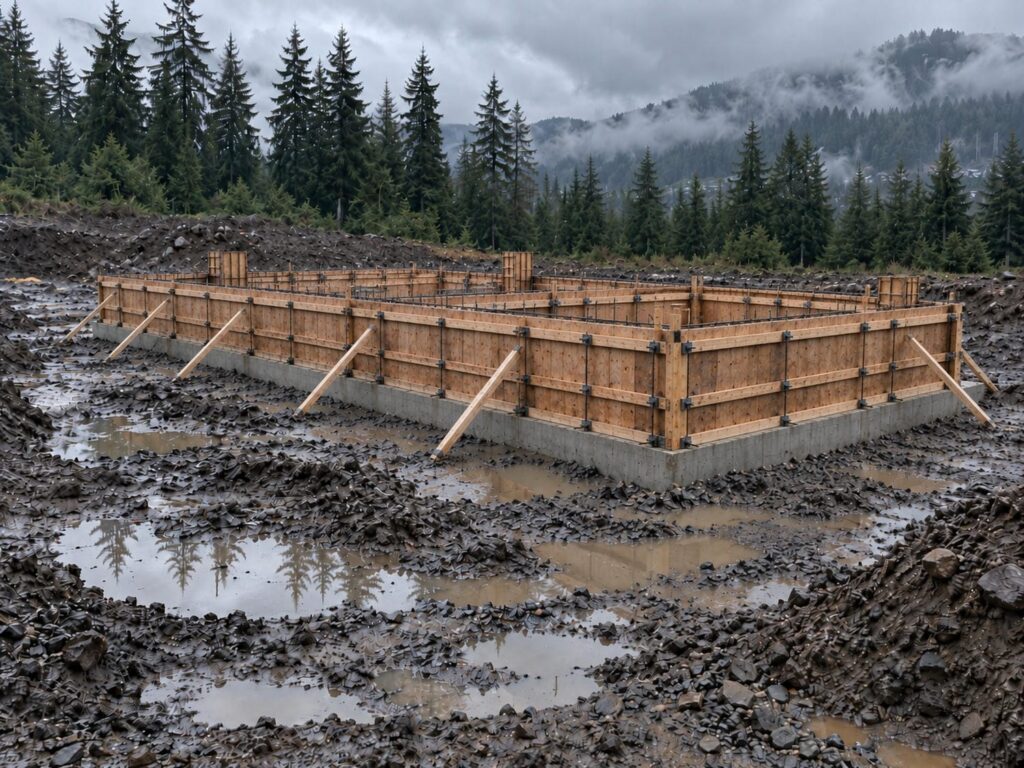
A formwork blowout is a form losing containment while the concrete is still liquid, so wet concrete escapes through the breach and keeps coming until somebody stops the pump. Fresh concrete is dense, and until it stiffens it behaves roughly like a heavy liquid. That makes a wall form a pressure vessel rather than a…
Read MoreICF vs Poured Concrete: Which Foundation Approach Fits Your Build?
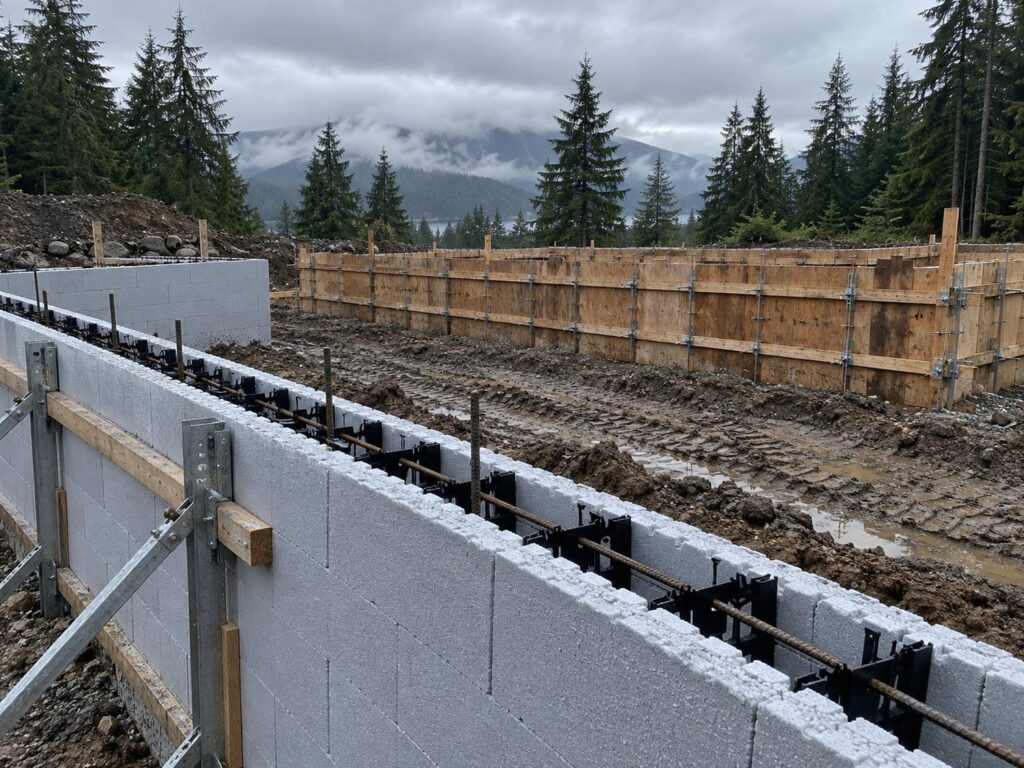
ICF vs poured concrete comes down to one decision: does the mould come off the wall, or does it stay on forever. In conventional forming the panels are stripped, cleaned and used again on the next house. In ICF the mould is rigid foam, and it never leaves. Cost, speed, insulation and what you can…
Read MorePouring Concrete in the Rain: How Forming Crews Manage BC’s Wet Season
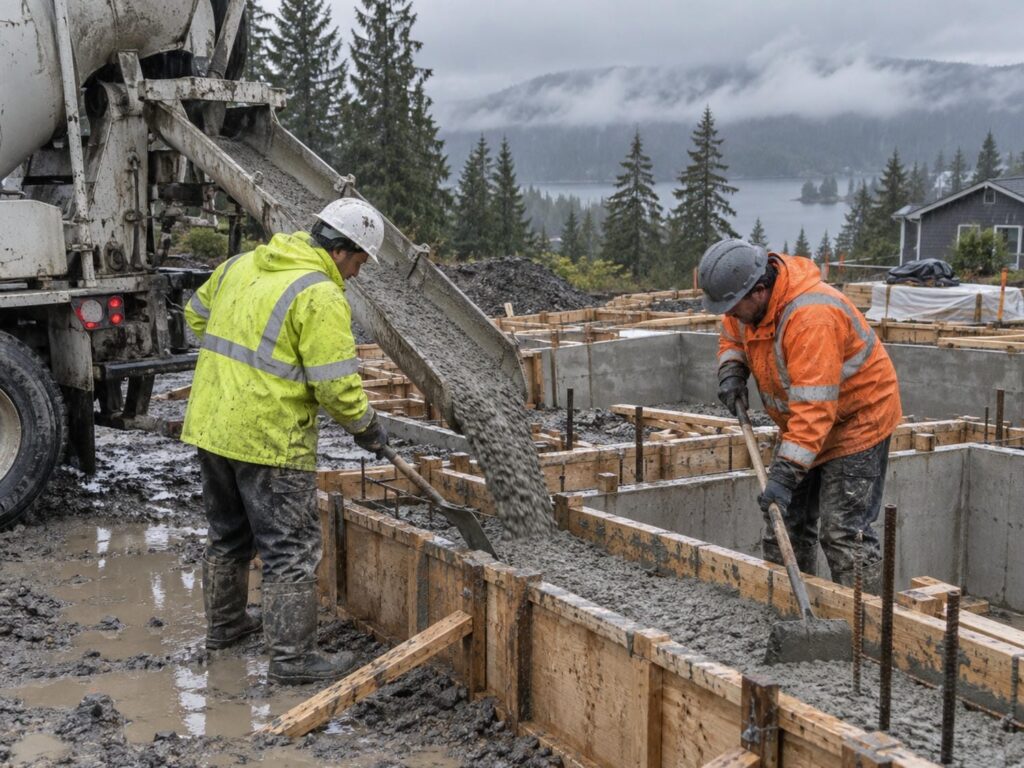
Crews pour in the rain across this province all winter, and rain landing on fresh concrete is usually not what ruins a pour. What ruins it is water worked into the surface by a finisher, water added at the truck to keep a stiffening load moving, and water standing in the forms before the concrete…
Read MoreWhen Can You Strip Concrete Forms? Curing Times That Protect the Pour
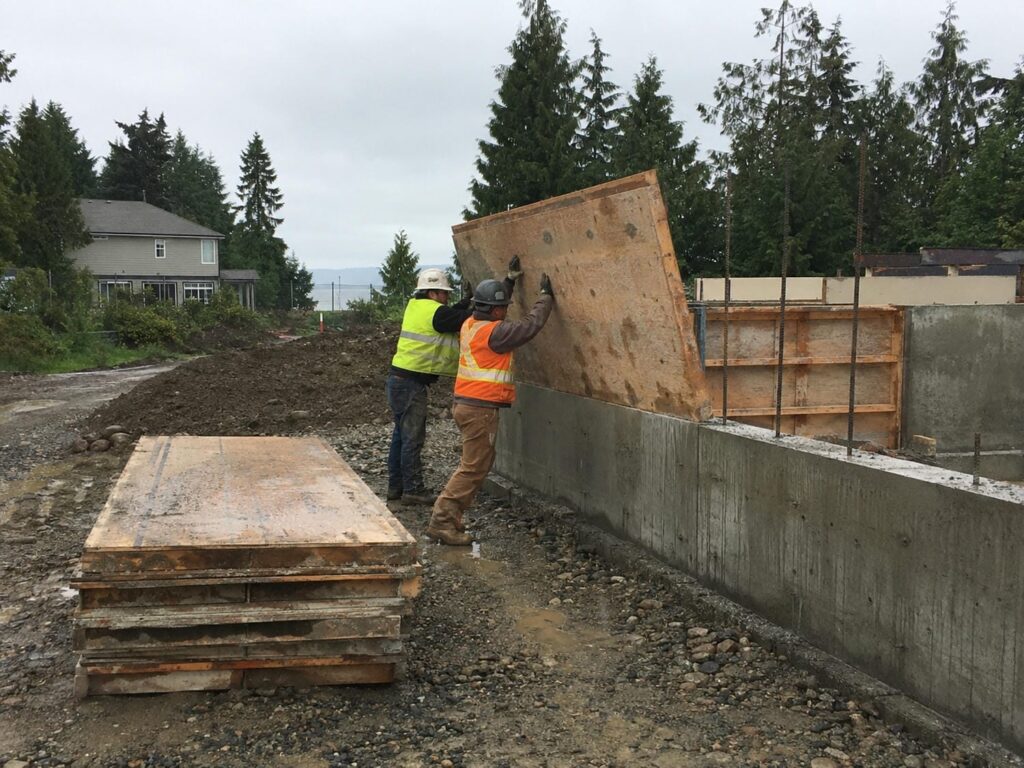
Forms come off when the concrete can carry its own weight plus whatever is going on it next. They do not come off because a set number of days has passed. Every argument on site about when to remove concrete forms is really an argument about one thing: whether the concrete has taken over the…
Read MoreReusable Formwork Vs Traditional Plywood Formwork
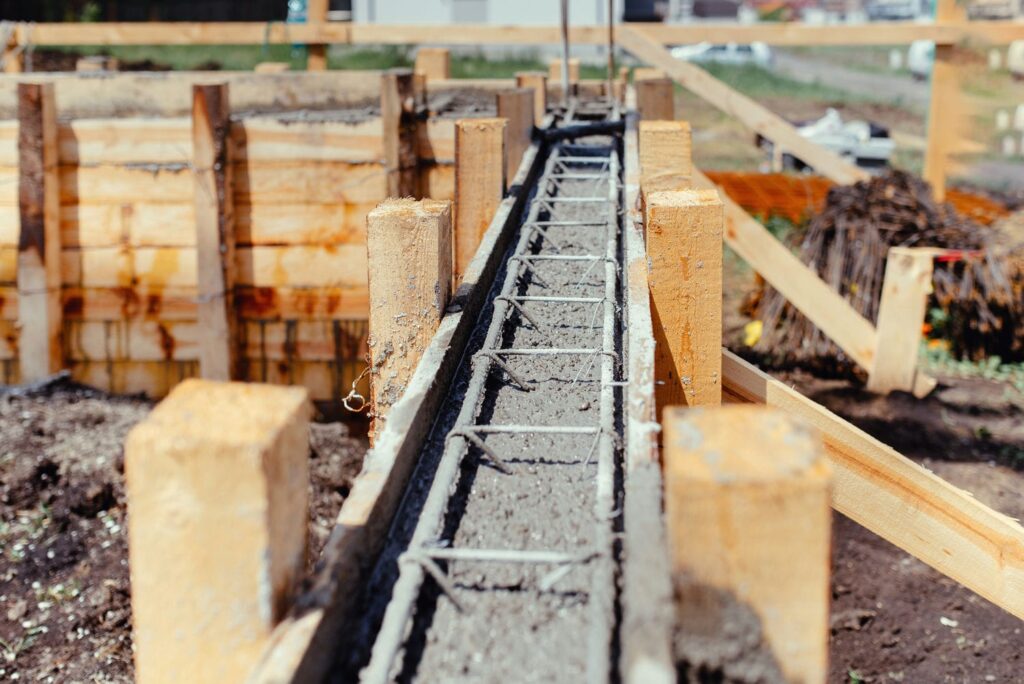
Reusable formwork usually makes more sense when the structure repeats enough to spread setup time, handling, and system cost across multiple pours. Traditional plywood formwork usually makes more sense when the geometry is irregular, the scope is short, or the crew needs more freedom to adapt in the field. If you want to compare those…
Read MoreShoring Vs Reshoring Vs Falsework: What’s The Difference?
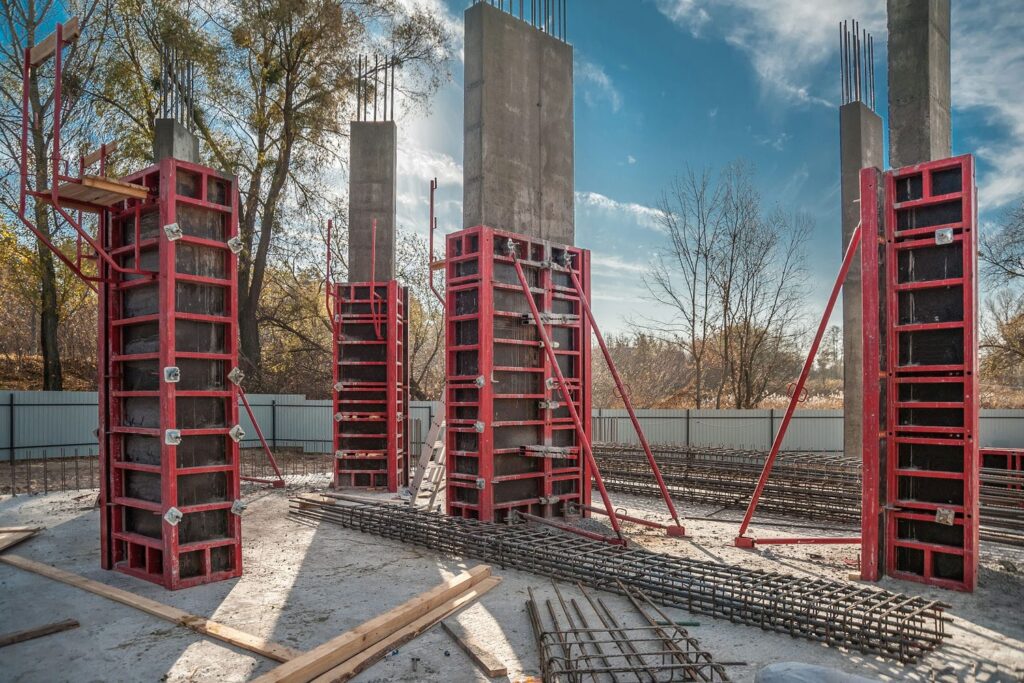
On cast-in-place concrete projects, the terms shoring, falsework, and reshoring often appear in drawings, scopes, and site conversations. While they are related, they refer to different stages of temporary structural support during a concrete slab cycle. Falsework supports formwork and freshly placed concrete before the structure can carry its own load. Reshoring is installed after…
Read More