
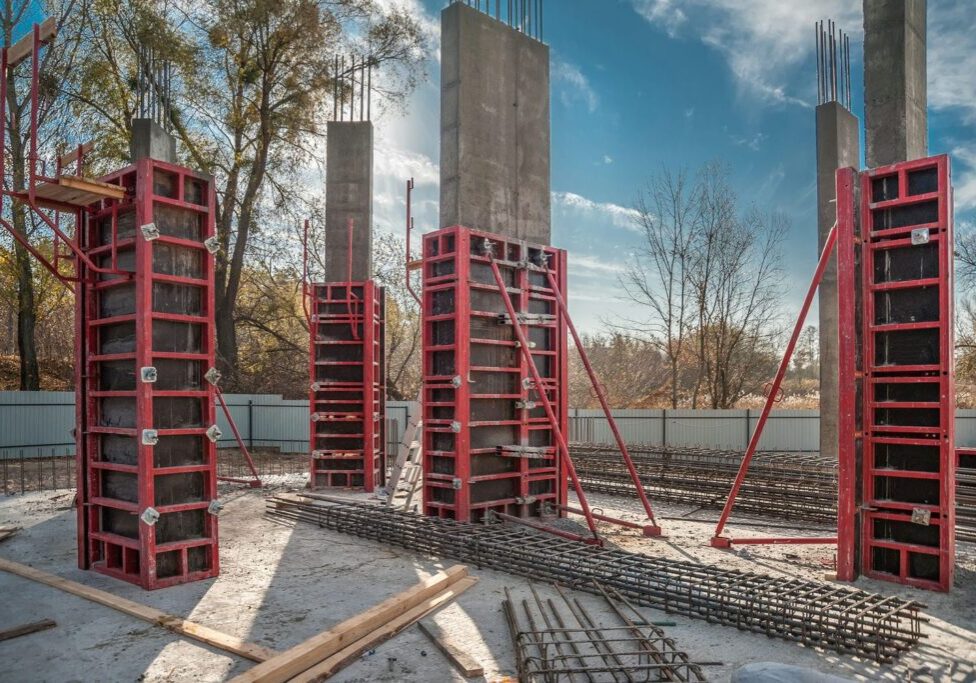
On cast-in-place concrete projects, the terms shoring, falsework, and reshoring often appear in drawings, scopes, and site conversations. While they are related, they refer to different stages of temporary structural support during a concrete slab cycle.
Falsework supports formwork and freshly placed concrete before the structure can carry its own load. Reshoring is installed after stripping so partially cured slabs can continue transferring loads safely while gaining strength. Shoring is the broader construction term for temporary structural support used in situations such as excavations, structural stabilization, or temporary load support.
Understanding the difference between shoring vs reshoring vs falsework helps builders, supers, and estimators read slab-cycle scopes more clearly and avoid confusion about temporary support responsibilities on site. If you are reviewing a slab-cycle scope or temporary works note with a concrete formwork contractor, getting those terms right helps you avoid scope gaps, bad assumptions, and unnecessary site friction before work starts.
The Fastest Way To Tell Them Apart
The easiest way to separate these terms is to stop thinking about equipment first and think about purpose, timing, and load path. The same site may use all three ideas during one concrete sequence, but each term becomes more accurate at a different stage of the work.
The table below gives you the cleanest working distinction for jobsite conversations, scope sheets, and preconstruction review.
| Term | Main Job | Typical Timing | What It Supports |
| Shoring | Broad temporary support term | Varies by task | Soil, excavations, temporary structural support, or load-bearing members |
| Falsework | Carries construction loads before the permanent structure can | Before and during placement, and while the deck is still relying on temporary support | Formwork system and construction loads |
| Reshoring | Continues support after stripping while concrete gains strength | After original forms and shores are removed | Partially cured concrete and remaining construction loads |
In simple terms, falsework supports concrete during placement, reshoring supports partially cured slabs after stripping, and shoring is the broader term for temporary structural support in construction. The difference is not just the equipment. It is the timing, the load being supported, and whether the permanent structure is ready to carry that load.
That is why teams get into trouble when they use “shoring” as a universal label. It sounds harmless, but it can blur scope responsibility, confuse sequencing, and weaken the questions that should be asked before concrete placement or stripping.
What Each Term Means On A Concrete Job
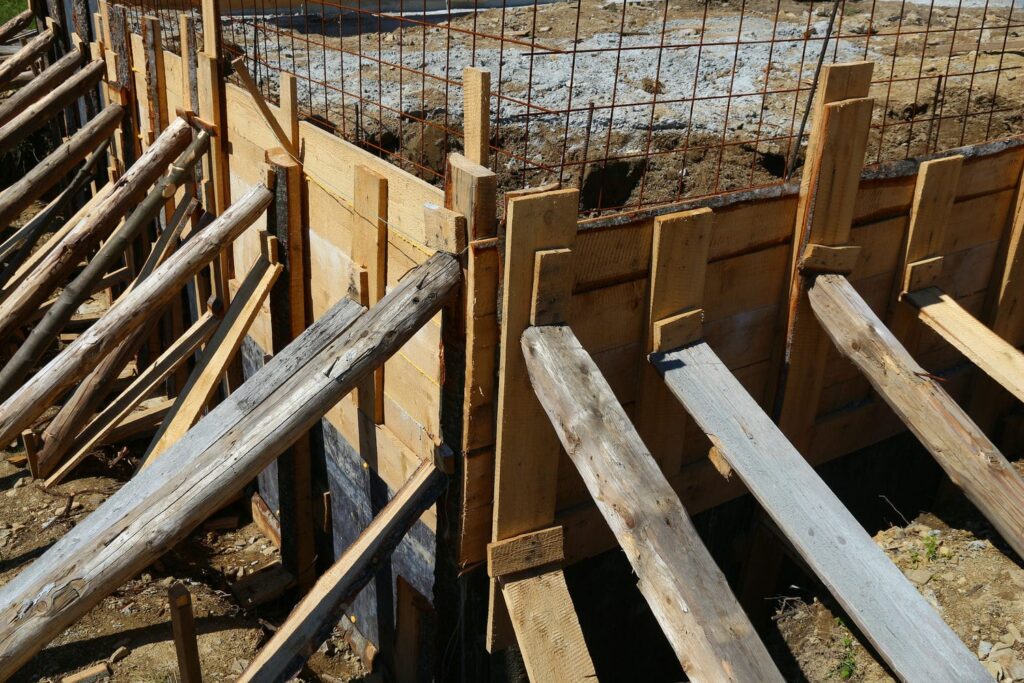
On a real project, these terms only make sense when they are tied to the stage of work. The key question is simple: what is supporting the structure at each phase of the slab cycle, what is being removed, and what temporary support still needs to remain in place.
Shoring Supports An Excavation, Structure, Or Temporary Load
“Shoring” is the broadest term in the group. In practice, teams use it for support systems in excavations, trench work, structural stabilization, and other temporary support conditions. In B.C., the OHS regulation has separate excavation shoring requirements, including rules on shoring installation and removal, which is one reason the word often carries a broader meaning on site than it does in a narrow slab-cycle conversation.
That broader use is exactly why builders should pause when someone says “shoring” without context. The next question should be simple: support for what, and at what stage? Once you ask that, the conversation usually becomes clearer very quickly.
Falsework Carries Construction Loads Before The Structure Can
In practical concrete construction language, falsework refers to the temporary support system carrying construction loads before the permanent concrete structure can safely do that work on its own. On suspended slab or deck work, that usually means the temporary system under and around the formwork while the pour sequence is still relying on temporary load support. This temporary support system is closely tied to the work performed by a professional formwork contractor responsible for forming, sequencing, and supporting the slab cycle safely.
In B.C., the current cast-in-place concrete rules treat formwork, falsework, and reshoring as separate elements within worksite-specific plans, supervision, hazard control, and inspection requirements.
Builders care because falsework affects access, pour sequence, stability, crane planning, and how aggressively the slab cycle can move. When the falsework discussion is vague, the downstream schedule usually gets vague too.
Reshoring Supports Partially Cured Concrete After Stripping
Reshoring is the support phase that follows stripping. In the US, OSHA defines reshoring as the operation in which shoring equipment is placed as the original forms and shores are removed so partially cured concrete and construction loads remain supported. That definition is useful because it makes the timeline visible: first the original support system, then stripping, then reshoring while the concrete keeps gaining strength.
For builders and supers, the practical point is load path. Removing the original forms does not make the loading issue disappear. It changes where the load goes and what temporary support still needs to stay in place while upper levels, materials, and ongoing activity continue to affect the structure.
How They Work Together During A Slab Cycle
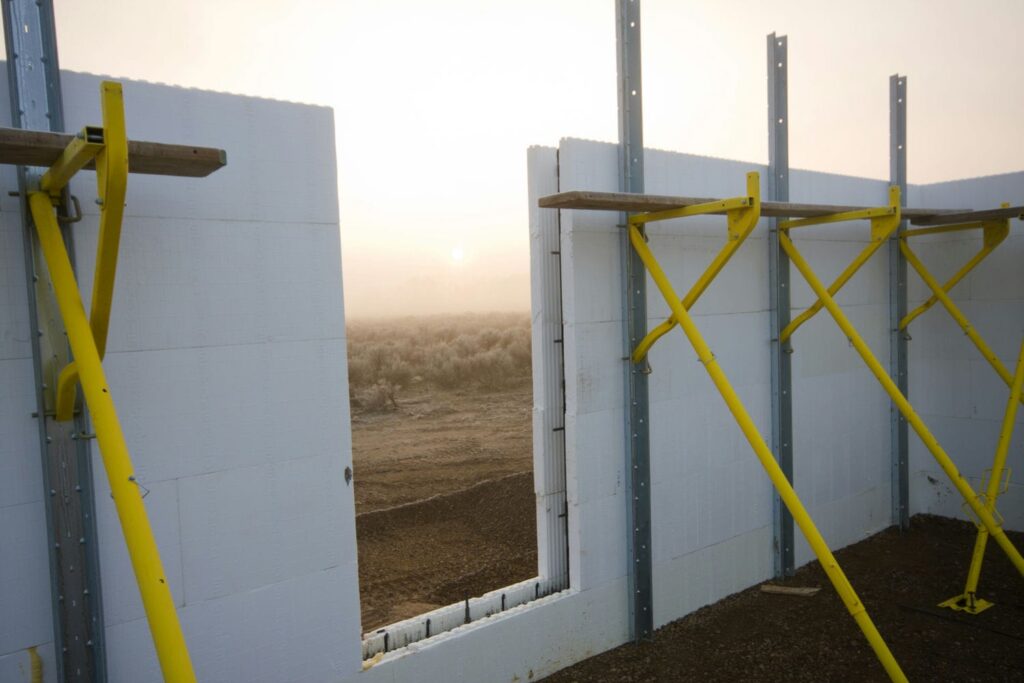
These systems make the most sense when you see them as part of one sequence instead of three isolated terms. That sequence is where builders can spot scope gaps early and keep the conversation grounded in what the structure is actually relying on at each stage.
Before The Pour
Before the pour, the site is focused on getting the temporary support system in place, aligned, checked, and ready for intended loading. This is where falsework sits closest to the centre of the conversation, because the permanent concrete is not yet in position to carry the construction loads on its own.
This is also the stage where sloppy terminology starts causing real trouble. If one party thinks “shoring” means the whole temporary support package and another thinks it only means a narrow part of the support system, the job can carry that confusion forward into pricing, erection, and inspection.
During Placement And Early Cure
During placement and early cure, the temporary support system is still doing real work. B.C.’s regulation requires worksite-specific plans for specified formwork, requires qualified supervision for erection, use, and dismantling, and restricts loading on uncured concrete structures except as permitted by those plans.
That is why the strongest slab-cycle planning stays disciplined about sequence, communication, and on-site control.
After Stripping
After stripping, the conversation changes. The original forms and shores may be coming off, but the slab may still need support while it continues to gain strength and while construction activity continues above or around it. That is the moment where reshoring becomes the more accurate term.
This is also where site teams can make costly assumptions. A deck can look complete long before it is ready to carry every load the schedule wants to place on it. Reshoring keeps the focus on what still needs support rather than what simply looks finished.
Why Multi-Level Pours Make The Difference More Important
The difference between falsework and reshoring becomes more important on stacked or faster slab cycles because the loads do not vanish when one phase ends. They move through the structure differently as forms come off, new work starts above, and construction loads remain in play.
For builders, that matters because sequencing pressure can hide terminology problems until they become field problems. The tighter the cycle, the more value there is in using the right term at the right moment and tying it back to the actual support responsibility on site.
The Key Differences Builders, Supers, And Estimators Should Watch

Once the basic definitions are clear, the next step is commercial and operational.
Difference In Purpose
Shoring is broad. Falsework carries construction loads before the permanent concrete structure can. Reshoring carries support forward after stripping while the concrete is still not ready to carry all required loads on its own.
That difference in purpose should shape how you read a scope sheet. If the purpose is not clear, the responsibility will usually not stay clear either.
Difference In Timing
Timing is often the fastest test. If you are talking about support before or during the pour cycle, you are usually closer to falsework. If you are talking about support that stays or is installed after original removal to help partially cured concrete continue carrying load, you are talking about reshoring.
This is why the same equipment can confuse people. The pieces may look similar, but the sequence changes what the system is doing. On site, timing often tells you more than appearance.
Difference In Scope Language
Estimators and PMs should care about terminology because scope language drives responsibility. If a package simply says “shoring” when the job really involves formwork support, inspection, stripping transition, and reshoring assumptions, the wording may be too loose to protect the build.
Clear language does not make a package longer for the sake of it. It makes it easier to price, easier to coordinate, and easier to defend when the project gets busy.
Difference In Engineering, Review, And Site Questions
These systems also trigger different questions around review, sequencing, loading, inspections, and documentation. In B.C., current rules require certified worksite-specific plans for specified formwork, require qualified supervision, and require inspection and certification before intended loading of specified formwork and associated falsework or reshoring.
The takeaway for builders is simple: when the term changes, the questions often change too. That is why it helps to separate terminology before price or schedule pressure starts flattening everything into one catch-all label.
Where Teams Commonly Get The Terms Wrong
Most confusion does not start with bad intent. It starts with shortcuts. Teams say what feels familiar, others nod along, and the job carries a fuzzy distinction farther than it should.
Using “Shoring” As A Catch-All
This is the most common problem. “Shoring” sounds broad, useful, and familiar, so it ends up covering excavation support, temporary structural support, and slab-cycle support all at once. That makes the conversation sound smooth while hiding real differences in stage and purpose.
For builders, the fix is not to police language for the sake of it. The fix is to keep asking what is being supported, when it is being supported, and whether the support is original or post-stripping.
Treating Falsework And Formwork As The Same Thing
Formwork and falsework are related, but they are not interchangeable terms. In B.C., the cast-in-place concrete rules refer to formwork, falsework, and reshoring separately within worksite-specific plans, supervision, hazard control, and inspections, which is a useful signal that they should not be collapsed into one vague label.
The practical distinction is simple. Formwork is closer to the moulding and support system around the concrete placement itself, while falsework is the temporary load-support side of the construction sequence. On site, those ideas work together, but they are not the same question.
Mixing Up Responsibility Between The Formwork Crew, Concrete Crew, And Engineer
Temporary support discussions often fail at the handoff between trades and review roles. One party assumes another is carrying the support detail, another assumes the drawings settle it, and the field ends up working through an issue that should have been explicit earlier.
That is why builders are usually better served by making responsibility visible in the scope, the review path, and the site sequence. Assumptions do not stay harmless for long once concrete placement and stripping dates are locked in.
When The Difference Matters Most On Real Projects
On a simple conversation, these words may feel interchangeable. On a real project, they become more important when schedule pressure, stacked loading, and tight access raise the cost of misunderstanding.
Suspended Slabs, Elevated Decks, And Transfer Conditions
These terms matter most where the temporary support sequence is carrying real structural consequence. Suspended slabs, elevated decks, transfer conditions, stair and landing forms, and other overhead or elevated concrete work all create more need for precise language because the temporary support is doing more visible, time-sensitive work.
On that kind of project, you do not want vague scope language masking who is doing what. The more complex the condition, the more value there is in naming the support phase accurately.
Fast-Track Schedules And Early Stripping Pressure
Schedule pressure is one of the biggest reasons these distinctions start to matter. When teams are pushing the slab cycle, everyone wants clarity on what can come out, what must stay in, and what assumptions are being made about the structure’s ability to carry ongoing loads.
That is why terminology should be settled early, not while the schedule is already under strain. Clear language makes the project easier to manage when the work gets fast.
Tight Access, Sequencing, And Multi-Trade Sites
On busy sites, temporary support affects more than the formwork crew. It affects access, crane use, deliveries, reinforcing activity, concrete placement, housekeeping, and the timing of follow-on trades. When support terminology is fuzzy, coordination usually gets fuzzy with it.
Bring Clarity To Your Formwork Scope Before The Pour
Understanding the difference between shoring, reshoring, and falsework is not about sounding technical on a site walk. It is about reading scopes more clearly, coordinating slab sequences with fewer surprises, and asking better questions before schedule pressure takes over.
On cast-in-place concrete projects, clear temporary support planning helps builders avoid scope gaps, stripping mistakes, and confusion about load transfer between levels.
At Madera Projects and Design Ltd., our crews work closely with builders and site teams to deliver organized formwork systems, reliable temporary support sequencing, and clear scope coordination before concrete placement begins.
If you are planning a suspended slab, deck, or structural concrete project and want experienced support from a professional formwork subcontractor, Madera Projects can help bring clarity to the temporary support scope before the pour.
FAQs
Is Shoring The Same As Falsework?
No. Shoring is a broad construction term for temporary structural support used in excavations, structural stabilization, or load support. Falsework specifically refers to the temporary system that supports formwork and wet concrete during placement before the permanent structure can safely carry construction loads.
What Is Reshoring In Concrete Construction?
Reshoring is the support placed as the original forms and shores are removed so partially cured concrete and ongoing construction loads remain supported. It belongs to the post-stripping phase of the sequence.
Is Formwork The Same As Falsework?
Not exactly. They work together, but they are not the same term. In B.C., the current cast-in-place concrete rules refer to formwork, falsework, and reshoring separately within plans, supervision, and inspections.
When Is Reshoring Needed?
Reshoring is needed when the original support is being removed but the concrete still requires support to carry its weight and construction loads safely. The exact timing depends on the project-specific design, sequence, and strength assumptions.
Who Usually Carries Reshoring In The Scope?
It depends on the drawings, the subcontract scope, and the temporary works setup. The important point is that it should be explicit in the package and not left to trade assumption.
Why Do Builders And Supers Need To Know The Difference?
Because the terms affect scope clarity, stripping assumptions, lower-level loading, sequencing, and who is responsible for temporary support at each stage. Clear language supports cleaner pricing and fewer field surprises.