
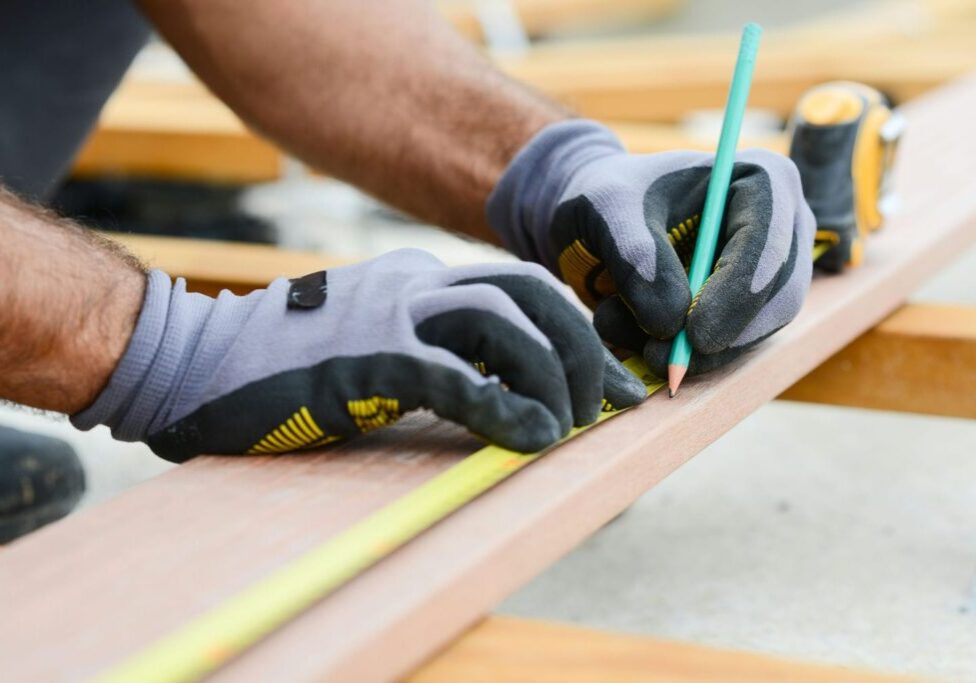
Out-of-square framing gets expensive because the mistake rarely stays inside the framing phase. A wall, opening, floor line, or stair void that is not square, plumb, level, or true can push extra work into windows, drywall, trim, cabinets, stairs, cladding, flooring, and final deficiencies. The $20K finishing headache is not a fixed industry average. It is a realistic custom-home scenario where several trades are forced to correct, adapt, delay, or redo work that should have been caught before the frame was covered. Careful framing of a custom home protects the schedule because we check the frame before later trades are asked to build on rough geometry.
Out-Of-Square Framing Cost At A Glance
Out-of-square framing happens when walls, floors, openings, corners, or structural assemblies are not aligned closely enough for the next trade to install cleanly without correction or visible compromise. On a custom home, that can turn a rough carpentry issue into a finishing problem because the most expensive symptoms often appear after drywall, millwork, stairs, glazing, or trim are underway.
| Framing Issue | Where It Shows Up | Why It Gets Expensive |
| Walls Out Of Square | Room corners, cabinet runs, tile layouts | Finish trades need fillers, scribes, or layout changes |
| Walls Out Of Plumb | Door openings, tall walls, window returns | Hardware, drywall, and trim no longer land cleanly |
| Walls Out Of Plane | Long drywall runs, feature walls, millwork backs | Wavy surfaces become visible under light and finish |
| Floors Out Of Level | Stairs, flooring transitions, cabinetry | Later trades need shimming, correction, or redesign |
| Rough Openings Out Of True | Windows, doors, exterior trim, flashing | Installers fight the opening instead of installing cleanly |
| Stair Or Feature-Wall Geometry Drifting | Stairs, guards, panel details, reveals | High-visibility areas amplify the error |
| Exterior Wall Lines Not Matching Requirements | Cladding, rainscreen, windows, soffits | Envelope and exterior finishing work becomes harder to align |
The cost is usually not one dramatic framing repair. It is the chain reaction: measure again, shim, plane, reframe, patch, reorder, delay, redo, and ask finish trades to make a rough problem disappear. That is why framing accuracy should be checked before the next scope locks the problem in place.
What Out-Of-Square Framing Actually Means
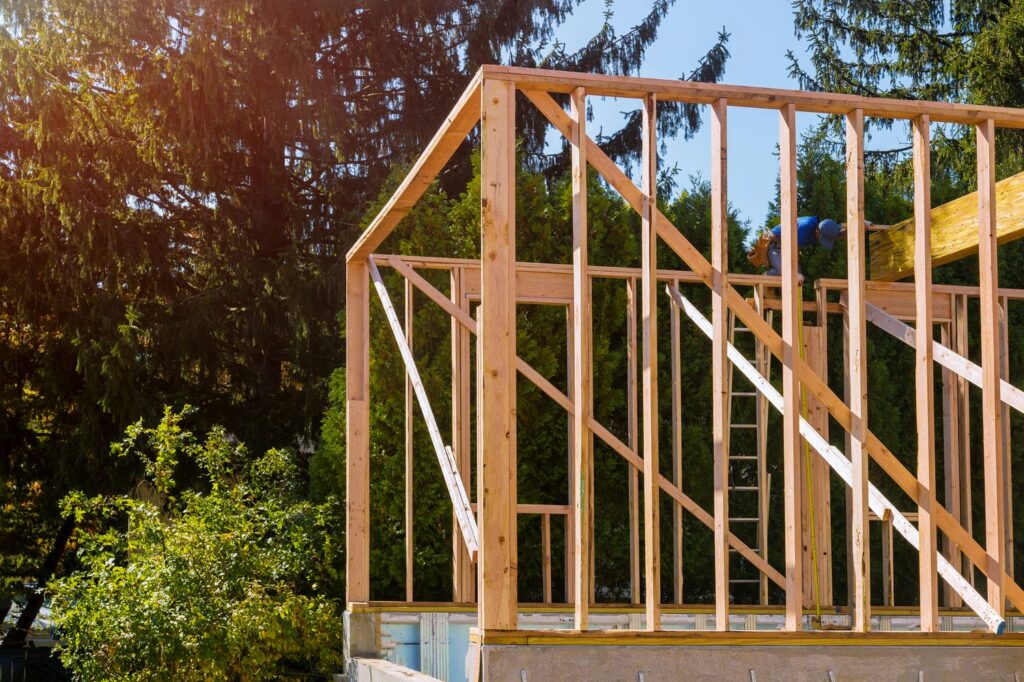
Builders and clients often use “out of square” as a catch-all phrase. On site, it can mean several different accuracy problems, and each one creates a different kind of finishing pressure. The first step is naming the issue correctly so the right correction can happen at the right stage.
This matters because the fix for a wall that is leaning is not always the same as the fix for a wall that is bowed. The more precise the diagnosis, the easier it is to decide whether the framing should be corrected, documented, or handed to a finish trade with a clear plan.
Out Of Square, Out Of Plumb, Out Of Plane, And Out Of Level
Out of square usually means corners, rooms, openings, or assemblies do not align to a true 90-degree relationship. Out of plumb means a wall leans vertically. Out of plane means a wall waves, bows, or drifts across its surface. Out of level means a floor, line, or horizontal reference is not flat or consistent.
Those differences matter in the field. A room can be square but still have a bowed wall. A rough opening can be plumb on one side and still be out of square across the diagonals. A floor can be close enough for framing but still create trouble for stairs, cabinetry, or tile if nobody checks it before finishes begin.
Why Small Rough Framing Errors Become Finish Problems
Small framing errors compound because every later trade depends on the frame for straight reference lines. Drywall follows the studs. Trim follows the drywall. Cabinets follow the wall. Windows, stairs, tile, doors, and millwork all need openings and planes that behave predictably.
That is why a rough framing miss that looks minor during wall framing can become obvious later. Once light hits a long wall, once a cabinet run meets a bowed corner, or once a stair line exposes drift across several surfaces, the finish trade is no longer hiding a small defect. It is managing a chain of visible compromises.
Where The Issue Usually Shows Up First
Out-of-square framing often shows up first at openings, stairs, long walls, and high-detail areas. Windows may need excessive shimming. Doors may not swing or latch cleanly. Drywall returns may look heavy. Cabinet installers may need fillers that were not planned. Trim may refuse to land cleanly into corners.
Supers should pay close attention to areas where several trades meet. Stair voids, large glazing openings, feature walls, kitchens, bathrooms, long hallways, and exterior corners are common places where rough accuracy issues stop being theoretical and start costing money.
Why The Finishing Headache Can Reach $20K
The $20K number should be understood as a scenario, not a published benchmark. It becomes plausible when one rough framing issue touches several trades, creates return trips, delays sequencing, and forces the builder to decide between visible compromise and real correction.
The key lesson is not the exact number. The key lesson is that late correction costs more because the problem is no longer exposed, simple, or owned by one crew.
The Number Is A Scenario, Not A Guaranteed Average
There is no reliable single average for the cost of out-of-square framing. A small issue caught before sheathing may take a few hours to correct. A late issue on a custom home can become a five-figure headache if it affects windows, drywall, cabinets, stairs, exterior finishing, paint, and final closeout.
The number becomes credible because of spread, not because one stud was crooked. Once multiple trades are asked to adapt around the same rough geometry, the cost is carried through labour, materials, supervision, schedule delay, and the risk of redoing finished work.
One Error Can Touch Several Finish Trades
A misframed opening can affect the window installer, exterior finishing crew, drywall boarder, taper, trim carpenter, painter, and deficiency list. A stair opening that drifts can affect framing, stair install, guard coordination, flooring, drywall, and interior finishing. A bowed kitchen wall can affect drywall, cabinets, countertops, backsplash, and final trim.
That is the part many budgets miss. The first mistake may be rough carpentry, but the invoice rarely stays there. Once the problem moves downstream, every trade has to decide whether to correct, conceal, adapt, or send the issue back.
Late Discovery Raises The Cost
The same issue costs less when the frame is still open. Before sheathing, windows, drywall, or finish work, a correction may be direct and contained. After the frame is covered, the same correction can require demolition, patching, replacement material, reinspection, schedule recovery, and extra coordination.
That is why a rough framing review is not a paperwork exercise. It is a cost-control point. The best time to fix geometry is before another trade builds value on top of the error.
Custom And Luxury Homes Have Less Forgiveness
Custom and luxury homes usually have tighter finish expectations, larger openings, more visible architectural lines, and more expensive finish packages. A rough framing error that might be softened on a simpler build can become a focal point in a high-end space.
That is why the framing stage has to respect the finish stage from the beginning. The way we approach framing a luxury custom home in the Lower Mainland depends on stronger layout control, protection, and structural coordination long before finishes begin.
What Counts As Too Far Out
Not every variation is a defect, and not every unusual line is wrong. Some walls, floors, ceilings, and assemblies are intentionally angled, sloped, or designed around a specific structural condition. The right first question is always whether the work matches the drawings, specifications, and site direction.
After that, builders can use performance references as a baseline. However, baseline performance guidance is not the same thing as a premium custom-home standard.
Use Drawings, Specs, And Site Direction First
Project drawings, specifications, engineer’s direction, and the builder’s quality standard should come before assumptions. A sloped ceiling, angled wall, curved feature, or unusual opening may be completely intentional. A square-looking wall that is not built to the approved layout may not be acceptable at all.
The practical point is to confirm before calling something a defect or asking a finish trade to adapt. Good field decisions start with the design intent, then move into measurement, documentation, and correction.
BC Housing’s Performance Guide Gives A Useful Minimum Benchmark
BC Housing’s Residential Construction Performance Guide gives practical reference points for new homes covered by home warranty insurance. For example, it sets a wall out-of-plumb benchmark of no more than 25 mm in 2.4 m unless the wall is specifically designed that way, and it sets a bowed interior framing benchmark of no more than 20 mm out of line within a 1.2 m plane. Use those numbers as a minimum performance reference, not a high-end tolerance target.
The same guide notes that repairs may not produce an exact match in colour, finish, or texture. That matters because late correction is not only about cost. It can also affect appearance, especially once finishes are already installed.
High-End Work Often Needs Tighter Internal Targets
A performance guide is not the same as a luxury builder’s internal standard. Large windows, flush details, tight reveals, stair features, and custom millwork often need cleaner rough geometry than a minimum complaint threshold.
That is why high-end homes need earlier quality checks. “Within minimum tolerance” may still create a poor finish outcome if the design depends on crisp lines, tight cabinet fits, or a long uninterrupted sightline. The better target is the one that protects the finish package, not just the warranty argument.
Finish Trades Hit Hardest By Out-Of-Square Framing
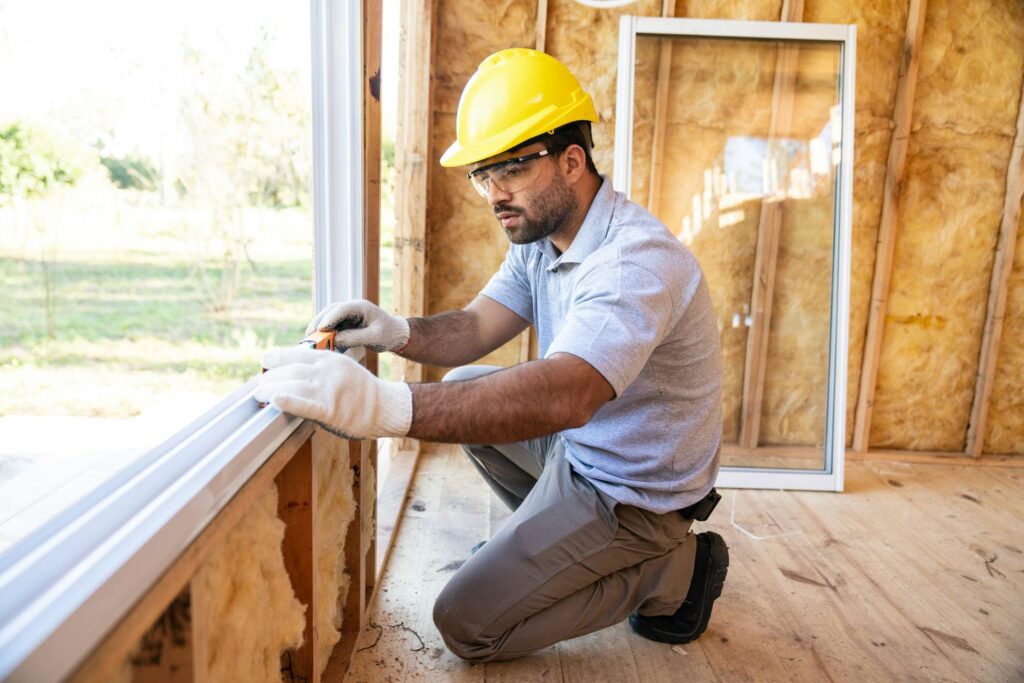
The trades hit hardest are usually the ones that need straight, square, predictable surfaces. They are also the trades that arrive when the home is becoming more expensive to change. By then, the rough problem may be buried under layers of work.
This is why framing accuracy should be treated as a builder-wide issue, not just a framing issue. A loose frame can make good finish trades look bad because they are being asked to solve a problem they did not create.
Windows, Doors, And Exterior Openings
Windows and doors reveal framing accuracy quickly. If a rough opening is out of square, out of plane, or inconsistent across its depth, the installer may need excessive shimming, extra adjustment, or a longer conversation about whether the opening should be corrected before the unit goes in.
Exterior openings also affect flashing, trim, cladding, and envelope details. A poor opening does not only create an install issue. It can make the exterior finish harder to align, harder to weather properly, and harder to close out cleanly.
Drywall, Trim, And Interior Finishing
Drywall often exposes wall plane problems because light reveals waves, bows, and heavy corners. Trim then sharpens those problems because casing, baseboard, crown, panel moulding, and reveal details all depend on consistent backing and straight surfaces.
Finish carpentry can soften some minor issues, but it should not become the default repair plan for poor rough framing. Excessive caulk, filler, shimming, or trim build-up usually means the rough condition should have been corrected earlier.
Cabinets, Millwork, And Built-Ins
Cabinets and millwork are unforgiving because they rely on square corners, straight walls, and consistent planes. A bowed wall behind a cabinet run can force extra scribes, fillers, shims, or changes to the planned reveal. In a custom kitchen, those adjustments can become visible fast.
Built-ins create the same problem. They often span long walls and meet several surfaces at once. If the frame drifts, the millwork team has to decide whether to hide the error, redesign the fit, or send the issue back for correction.
Stairs, Tile, Flooring, And Feature Walls
Stairs, tile, flooring, and feature walls amplify geometry. A stair opening that is off can affect treads, risers, guards, drywall, trim, and flooring transitions. Tile can reveal walls that are not square, especially in bathrooms, niches, and long runs. Flooring can show drift through pattern, transition, or hallway alignment.
Feature walls are just as sensitive. They are meant to be seen. If the frame behind them is not true, the finished detail may call attention to the rough framing problem instead of hiding it.
Where Builders Should Catch The Problem
The best time to catch out-of-square framing is before the next trade makes the correction more expensive. The frame should be checked at natural hold points, not only when a finish trade complains.
A good review rhythm protects the builder, the framer, and the trades that follow. It also reduces arguments because issues are found while they are still visible and measurable.
Before Sheathing Locks The Frame
Before sheathing or bracing locks the frame, the crew still has the best chance to correct layout, square, plumb, and plane. This is where diagonal checks, plumb checks, and wall-plane checks protect the rest of the build.
Once sheathing goes on, the frame becomes harder to move. That does not mean correction is impossible. It means the correction now carries more labour, more disruption, and often more trade coordination than it needed to.
Before Windows And Exterior Envelope Work
Exterior rough openings should be reviewed before windows, flashings, weather-barrier tie-ins, and cladding details begin. Once envelope work starts, framing correction becomes more disruptive because it can affect products, waterproofing, and inspection timing.
This checkpoint is especially important on homes with large glazing packages. A big window does not forgive a poor opening. It exposes it.
Before Drywall And Interior Finishes
Drywall should not be the first real framing accuracy check. If a wall-plane issue is discovered when the boarder starts, the project is already late in the correction cycle. At that point, the builder is choosing between delay, visible compromise, or a more expensive repair.
A rough framing review before drywall gives the site one last practical chance to correct the frame while access is still good. It is much cheaper to fix a wall before it becomes a finished surface.
During High-Risk Custom Home Conditions
High-risk areas deserve extra review. Large openings, engineered spans, tall walls, open-to-below spaces, stair voids, seismic details, irregular layouts, and long feature elevations all create more ways for small framing drift to become expensive.
Complex structural conditions raise the cost of casual layout errors because more details depend on the same geometry. The BC seismic framing requirements that apply to custom-home geometry, openings, and load path shape how we coordinate the frame before the finish package ever starts.
How To Reduce Out-Of-Square Framing Risk
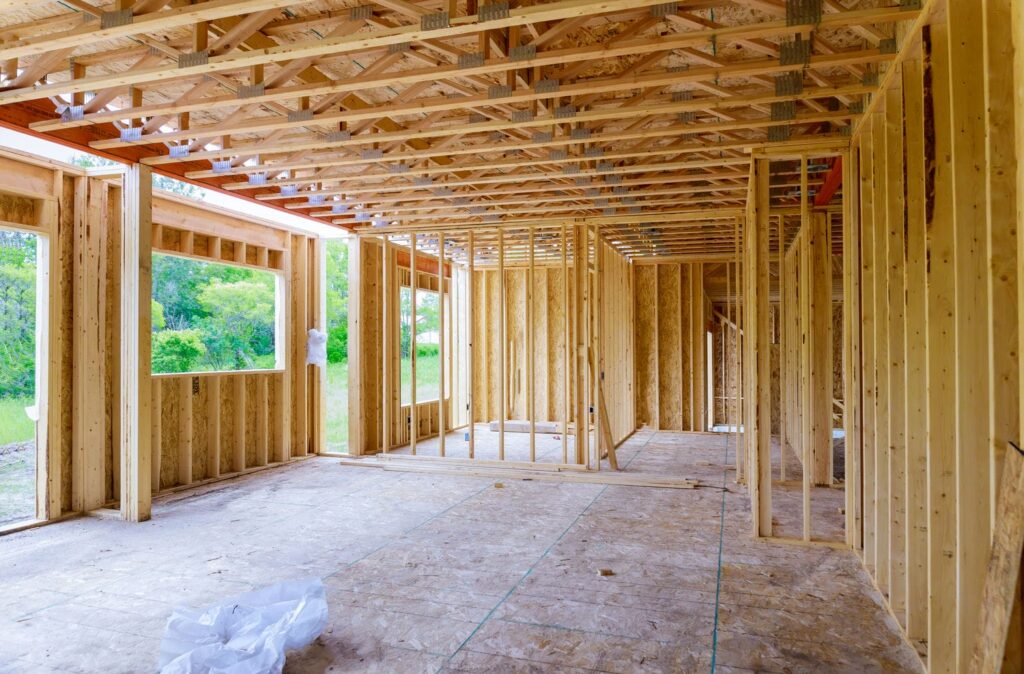
Reducing risk starts with a simple principle: layout accuracy comes before production speed. Fast framing that leaves the site fighting rough geometry is not efficient. It just moves the cost into more expensive scopes.
The best prevention plan is not complicated. It is clear reference lines, deliberate checks, early correction, and documentation before the work is covered.
Start With Layout Control And Reference Lines
Framing accuracy starts with reference lines. A good crew needs clear control lines, verified corners, and a shared understanding of which walls, openings, and feature areas matter most to the structure and finish package.
This is a leadership issue as much as a measuring issue. If the layout standard is not clear, the crew is left to make judgement calls that may not match the builder’s expectations or the finish package’s needs.
Check Diagonals, Plumb, Plane, And Opening Accuracy
A practical field review should check square, plumb, plane, and openings before the work is covered. Check diagonals for square. Check wall plumb. Check long wall planes. Check rough openings. Then recheck high-risk areas before sheathing, windows, or drywall.
The goal is not to slow the site down with unnecessary measuring. The goal is to catch the small issues while they are still small. A few minutes of checking can prevent several trades from working around the same avoidable miss.
Sequence Corrections Before The Problem Is Covered
Correction timing matters. A wall that can be adjusted during rough framing may become a demolition and patching problem later. The same error that takes half a day to correct early can take several trades to manage once finishes start.
Builders should treat correction timing as part of schedule protection. The earlier the issue is fixed, the less it spreads into labour, materials, supervision, and client-facing closeout.
Document Decisions Before They Become Deficiencies
Photos, measurements, marked-up plans, notes, and approvals matter when an accuracy issue is found. Clear documentation helps everyone understand what was discovered, what was accepted, what was corrected, and who owns the next step.
That reduces disputes later. It also supports cleaner handoffs, which is why our build process focuses on scope clarity, organized execution, and proactive communication before small issues become late deficiencies.
What To Do When The Frame Is Already Out Of Square
Sometimes the issue is already there. The frame is built, other trades are moving, and someone has finally found the geometry problem. At that point, the goal is not blame. The goal is to make the right correction decision before the cost spreads further.
The best response is calm and documented. Identify the issue, separate structural concerns from finish concerns, decide on the right repair path, and assign ownership clearly.
Separate Structural Questions From Finish Corrections
The first step is deciding whether the issue is structural, dimensional, or mainly finish-related. If a wall, opening, beam, stair void, or connection affects structure, the builder should go back to the drawings, engineer, and authority path rather than asking a finish trade to improvise.
That protects the project. A finish workaround may be acceptable for a minor visual issue, but it is not a substitute for structural direction when the frame itself does not match the approved intent.
Decide Whether To Correct The Frame Or Adapt The Finish
Sometimes the right answer is to open the area and correct the framing. In other cases, a carefully planned finish adaptation may be acceptable. The decision should be based on visibility, performance, cost, schedule, and who owns the underlying issue.
The mistake is letting each trade adapt a little without a shared plan. That hides the decision inside several scopes, and the cost usually resurfaces later as rework, visible compromise, or a final deficiency.
Assign Cost Ownership With Clear Records
Out-of-square framing can become a dispute when there are no records. Builders need photos, measurements, dates, trade notes, and a clear description of what was found and when it was found.
Good records keep the correction moving. They also make it easier to separate an original framing issue from later trade damage, design change, or field condition that was accepted during the build.
How Builders Should Compare Framing Partners
Choosing a framing partner only on speed or price can be expensive when the job is finish-sensitive. The better question is whether the team can protect layout, manage corrections early, and hand off a frame that later trades can trust.
That is especially important on custom homes, luxury homes, and projects with large openings, complex geometry, or tight finish expectations.
Look Past The Fastest Or Cheapest Crew
A fast crew can still be the wrong crew if the frame creates downstream rework. Price matters, but the cheapest number is not cheaper if it leaves windows, drywall, millwork, stairs, and trim crews fighting the structure later.
Builders should compare total project impact, not just rough framing labour. A careful frame protects the schedule long after the framing crew leaves site.
Ask How They Check The Frame Before Handover
A framing partner should be able to explain how they check square, plumb, plane, rough openings, bracing, and high-risk details before handoff. If the answer is vague, the quality-control rhythm may be vague too.
This does not need to be complicated. A strong crew usually has a clear habit: measure, verify, correct, document, and then release the area to the next trade.
Confirm Scope For Deficiency Prevention And Rework
The framing scope should define what is included, how layout issues are reviewed, how corrections are handled, and what happens if access, sequence, or builder direction changes. Loose scope is one reason framing accuracy problems become late disputes.
Clear scope protects both sides. It gives the builder a better handoff and gives the framing team a fair basis for managing issues before they become deficiencies.
Use Prequalification To Test Site Leadership
Prequalification helps test whether a framing partner understands layout discipline, supervision, quality checks, and the cost of downstream rework. It moves the conversation beyond labour capacity and into execution quality.
The questions we use to prequalify a carpentry subcontractor are built to screen for site leadership before a framing issue becomes a finishing problem.
Protect Your Finish Schedule From Framing Errors
Out-of-square framing is expensive because it rarely stays inside the framing phase. It becomes a finishing headache when windows, drywall, trim, cabinets, stairs, flooring, and exterior details all have to respond to rough geometry that should have been caught earlier.
Madera Projects helps builders reduce that risk with Red Seal carpenter oversight, clear scopes before work begins, reliable crews with strong onsite leadership, clean and organized job sites, and proactive communication that keeps issues visible before they become finish deficiencies. If you want the full service context, our custom home framing services set out how we protect layout accuracy from the first day on site.
Frequently Asked Questions
What Is Out-Of-Square Framing?
Out-of-square framing means walls, corners, openings, or structural assemblies are not aligned closely enough to support clean installation by later trades. It often overlaps with walls that are out of plumb, out of plane, or openings that are not true.
How Much Can Out-Of-Square Framing Cost To Fix?
There is no single average cost. A small issue caught early may be cheap to correct, while a late issue on a custom home can reach five figures if it affects windows, drywall, millwork, stairs, finishes, and return trips. The $20K angle is best understood as a realistic scenario, not a guaranteed benchmark.
Why Does Framing Accuracy Affect Finishing Costs?
Finishes rely on the frame for straight lines, clean openings, square corners, and predictable planes. If the frame is off, finish trades may need to shim, scribe, patch, rebuild, delay, or redo work to make the finished home look right.
When Should Builders Check For Out-Of-Square Framing?
Builders should check before sheathing locks the frame, before windows and envelope work, and before drywall. High-risk areas like large openings, stairs, tall walls, long hallways, and feature walls deserve extra review.
Can Finish Carpenters Hide Out-Of-Square Framing?
Sometimes they can soften minor visual issues, but finish carpentry should not be treated as the fix for poor rough framing. Excessive scribing, filler, shimming, or trim build-up usually means the frame should have been corrected earlier.
Who Pays For Out-Of-Square Framing Corrections?
That depends on the contract, scope, timing, cause, and records. Clear photos, measurements, notes, and correction approvals make it easier to assign responsibility and keep the project moving.
How Can Builders Prevent Out-Of-Square Framing Problems?
Builders can reduce risk by choosing a framing team with strong layout discipline, clear handoff procedures, reliable onsite leadership, and a habit of checking square, plumb, plane, and openings before later trades build on the frame.