
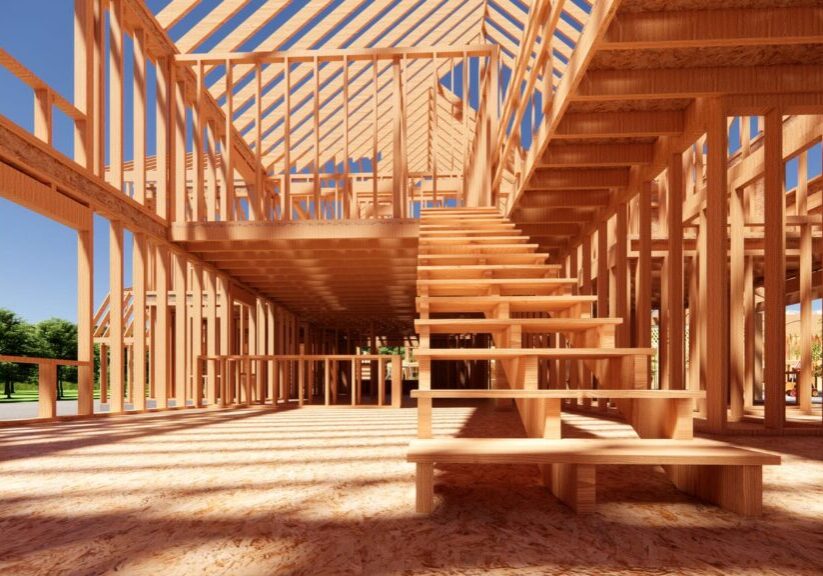
Framing a luxury custom home in the Lower Mainland usually means more than basic rough framing. It often includes larger engineered spans, more structural coordination around glazing and open spaces, tighter layout tolerances, more deliberate wet-weather protection, and cleaner sequencing so the frame stays accurate all the way into finishes. Much of this comes down to how new build framing is scoped, sequenced, and executed on site once the design gets more demanding.
On a simpler house, the frame can often rely on repetition and forgiving geometry. On a luxury custom build, the frame usually has to support bigger design ambition with fewer easy structural shortcuts. That changes how you plan the work, how you protect it, and how closely the framing package has to stay aligned with the drawings from the first wall layout onward.
Luxury Custom Home Framing At A Glance
Luxury custom home framing in the Lower Mainland is the structural wood-framing phase of a high-detail new build where design ambition, structural coordination, and local site conditions place higher demands on layout, sequencing, and tolerance control. The frame is not just there to hold the house up. It also has to protect long-term finish quality, envelope readiness, and the visual calm that high-end homes depend on.
| Framing Pressure Point | What Changes On A Luxury Home | Why It Matters In The Lower Mainland |
| Large Openings And Glazing | Less easy wall length and more structural coordination | Open elevations need cleaner framing decisions earlier |
| Long Spans And Engineered Members | More beams, dropped details, and interface points | Custom design puts more pressure on layout and sequencing |
| Tall Walls And Open-To-Below Spaces | More bracing, alignment control, and staging discipline | Complex geometry becomes less forgiving in the field |
| Wet-Weather Exposure And Dry-In | More protection planning and tighter exposure control | Local site conditions can punish weak moisture discipline |
| Seismic And Structural Coordination | Earlier attention to wall layout and load path continuity | The Lower Mainland often brings more structural pressure sooner |
| Finish-Sensitive Tolerances | Tighter expectations around plumb, plane, and opening accuracy | Rough framing errors cost more once premium finishes begin |
| Site Access And Sequencing | More deliberate workflow and trade coordination | Tight urban and suburban sites reward cleaner execution |
The practical takeaway is that luxury custom home framing is usually less about raw speed and more about accuracy, coordination, and protection. The better the design gets, the more important it becomes that the frame stays true enough to support windows, stairs, millwork, ceilings, and the rest of the finish package without expensive correction later.
What Makes Luxury Custom Home Framing Different
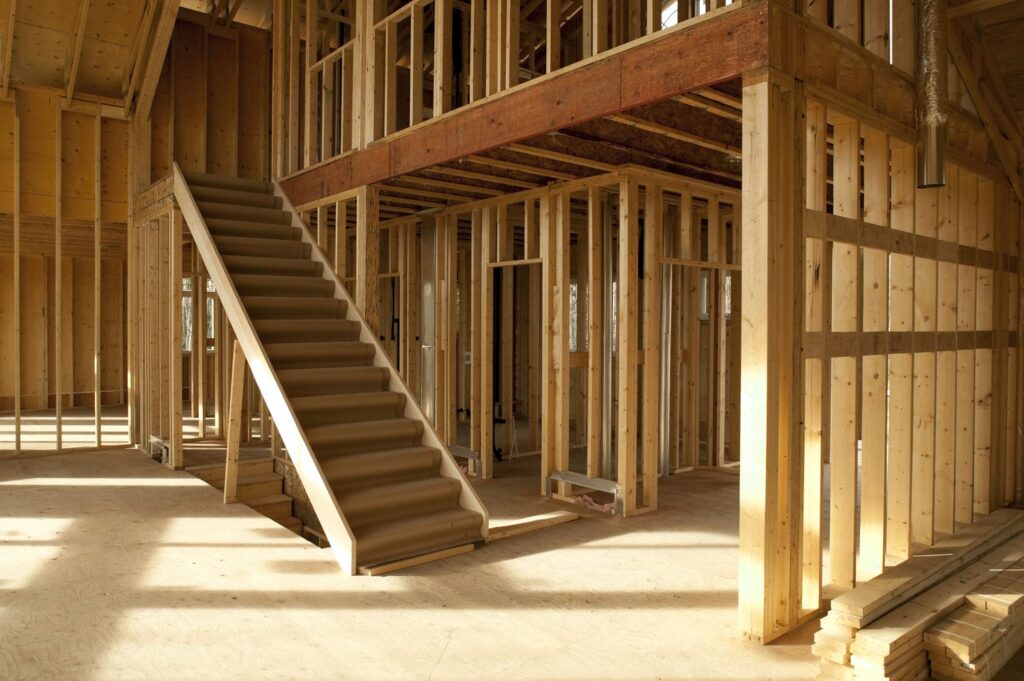
Luxury framing is different because the house itself is different. The design usually asks more from the structure, and the finished expectations are usually less forgiving. As a result, the framing package has to carry more responsibility earlier in the build.
That does not mean the work needs to be slow or overcomplicated. It means the framing phase needs to be more deliberate. A cleaner framing package usually makes the rest of the project feel calmer, because so many later details depend on it.
Bigger Design Ambition Changes The Framing Package
Luxury homes often introduce larger openings, longer spans, more engineered members, and fewer straightforward wall runs than a simpler house. That changes the framing package immediately because the structure stops being a repetitive exercise and becomes a more coordinated system of walls, beams, openings, and support conditions.
You can usually feel that difference early. The drawings carry more exceptions, the wall lines do more structural work, and the frame has to support both the architecture and the engineering more visibly. On a custom home, the “hard parts” of the house show up sooner and more often.
The Frame Has To Protect The Design Intent
On a luxury home, framing is not hidden background work that can drift and be corrected later. It shapes window geometry, stair alignment, ceiling transitions, reveal consistency, and the way later finish elements sit in relation to one another. If the framing package is loose, the design starts losing clarity before finishes even begin.
That is why good custom-home framing protects intent, not just structure. The job is to give the design a stable, accurate base so the finished house still feels composed once glazing, millwork, drywall, and finish carpentry arrive.
Tolerances Matter More Because Everything Else Builds On Them
Small framing errors are more expensive on higher-end homes because more of the house is visually exposed and more of the finish package is precision-dependent. What might be tolerated on a basic build becomes more visible when large glazing, custom stairs, flush trim details, and tighter reveals all rely on the rough frame being consistent.
That is one reason luxury framing has to be thought of as finish-sensitive work. The frame may be rough carpentry in trade terms, but the consequences of getting it wrong show up much later, when the cost of correction is far higher.
Why The Lower Mainland Changes The Conversation
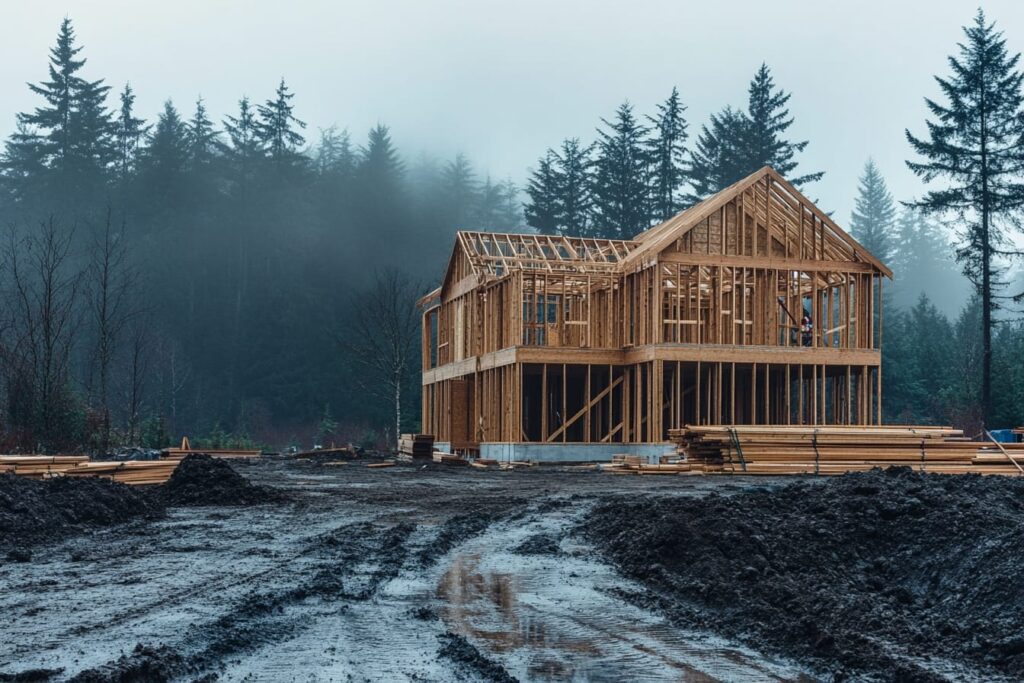
The Lower Mainland adds local pressures that make luxury framing even less forgiving. Weather, municipal code paths, and the region’s structural expectations all shape how cleanly a custom home has to be framed and protected.
This is where a generic framing conversation stops being good enough. A luxury home in the Lower Mainland is not only a complex design problem. It is also a local site-management problem.
Wet-Weather Exposure Raises The Stakes For Protection And Dry-In
In the Lower Mainland, wet-weather exposure is not a side issue. Metro Vancouver’s climate projections point to even hotter, drier summers, warmer, wetter winters, and more extreme weather, which gives builders a clear reason to treat protection and dry-in planning as part of the framing conversation rather than something to solve later.
For a luxury custom home, that matters because the frame often carries more complicated geometry, more exposure time at critical transitions, and more expensive downstream materials. Weak protection discipline can turn a strong framing package into avoidable rework, especially if sequencing and enclosure are not planned cleanly from the start.
Seismic And Structural Coordination Show Up Earlier On Complex Homes
Large window walls, long spans, open stair volumes, and irregular shapes tend to bring the structural conversation forward. On a simpler house, a lot of framing logic feels intuitive. On a more ambitious custom home, the structure usually needs more deliberate coordination around wall placement, openings, diaphragm behaviour, and load transfer.
That is one reason the Lower Mainland luxury conversation quickly overlaps with the structural one. The BC seismic framing requirements show how seismic demand and custom-home geometry start shaping the wood frame earlier than many people expect.
Vancouver Vs The Rest Of The Lower Mainland Can Change The Code Path
The code path is also not identical across the region. The Province says the BC Building Code 2024 came into effect March 8, 2024, that BC Codes do not apply in the City of Vancouver, and that projects with building permits applied for on or after March 10, 2025 are subject to the BC Building Code 2024 earthquake requirements outside Vancouver. The City of Vancouver’s 2025 Building By-law generally came into effect on September 15, 2025, with its seismic design provisions not required for permits submitted before September 15, 2026, and possible further deferral for certain in-stream projects.
That does not turn this page into a code article. It simply means Lower Mainland builders should not assume a Vancouver custom home is following the exact same permit path and timing assumptions as a project in Burnaby, Surrey, Richmond, or elsewhere outside Vancouver.
How Design Ambition Changes The Frame
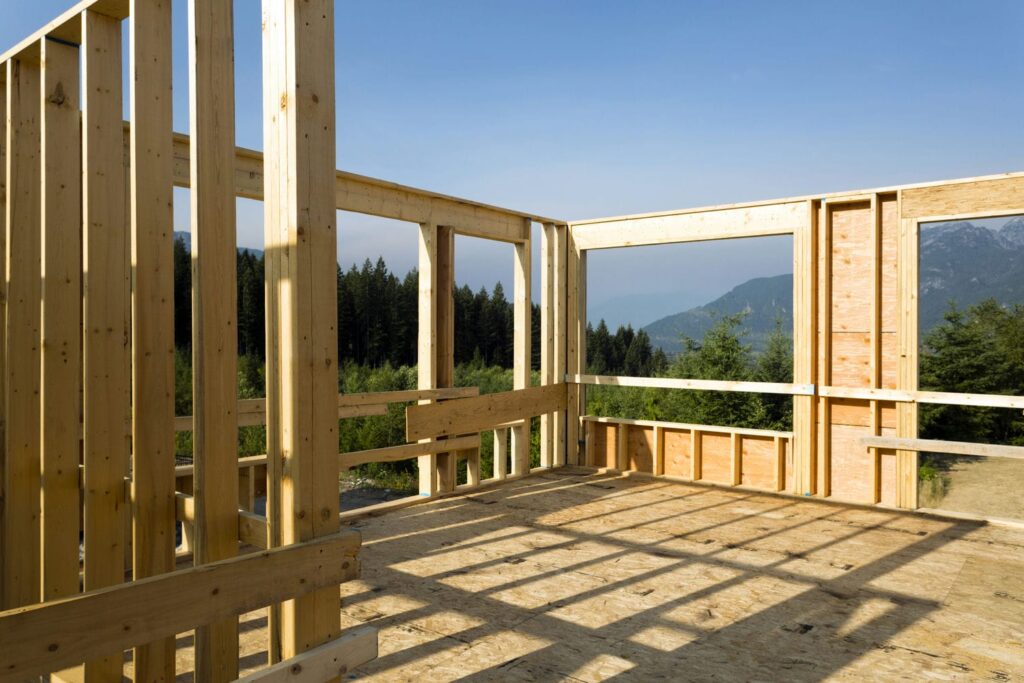
Luxury architecture changes the frame because it reduces the number of easy structural answers. The more the home prioritizes light, openness, long views, and sculpted volume, the more the frame has to work around fewer straightforward wall lines and more special conditions.
That is why the rough frame becomes one of the most important translating phases on the job. It takes abstract design ambition and turns it into real geometry that later trades have to trust.
Large Openings And Window Walls Reduce Easy Framing Options
Large openings are one of the clearest examples. Wide glazing and stacked window conditions can remove a lot of solid wall length, which means the framing package has fewer easy places to carry structure without more deliberate coordination.
That does not mean luxury homes cannot be open. It means the frame cannot rely on the same simple repetition that works in a more conventional house. The more glass a design carries, the more the structure has to be planned around it.
Long Spans And Engineered Members Need Cleaner Coordination
Luxury homes often introduce engineered wood, steel interfaces, hidden beam conditions, or dropped structural details much earlier than a typical residential build. That changes the rough framing package because the crew is no longer only standing standard walls and floors. They are also working through a more detailed set of structural transitions.
Those details reward cleaner coordination. If the beam locations, bearing logic, or dimensional expectations are not settled early, the site often ends up trying to solve structural clarity issues during production, when every adjustment costs more time.
Tall Walls, Vaulted Spaces, And Open-To-Below Areas Add Complexity
Tall entry walls, vaulted ceilings, double-height spaces, and open stairwells all create the kind of volume people want in a high-end custom home. They also create taller, more exposed framing conditions that depend on careful staging, bracing, and alignment.
This is where a commodity framing mindset starts to struggle. A tall wall that is slightly off or poorly sequenced can have consequences far beyond the framing phase. On a luxury build, those areas usually deserve more attention before the crew starts moving quickly through them.
Irregular Shapes, Cantilevers, And Step-Backs Reduce Forgiveness
Once the home moves away from a simple stacked footprint, the frame usually becomes less forgiving. Cantilevers, offsets, step-backs, complex rooflines, and layered facade conditions all reduce repetition and introduce more places where layout, sequencing, and structural assumptions can drift apart.
That does not make irregular homes a problem. It simply means the frame needs stronger planning. The more the house departs from the simplest form, the more important it becomes that the framing package is being led rather than improvised.
What The Best Framing Packages Get Right On Site
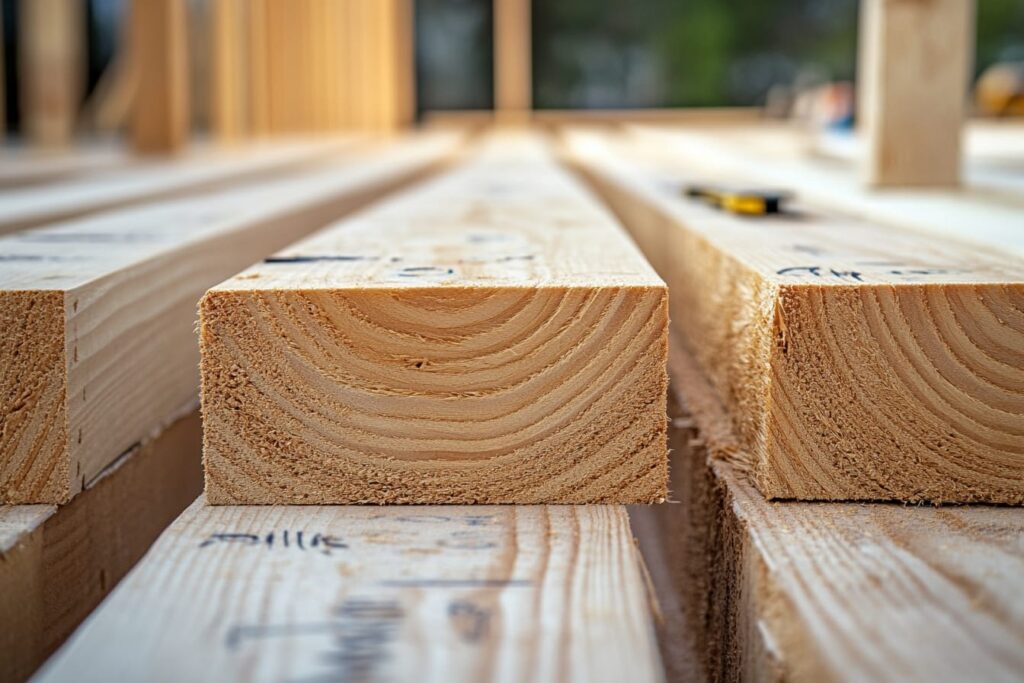
A strong luxury framing package is not only about what is on the plans. It is also about how the site executes it. The best framing crews make the hard parts of the house feel organized instead of chaotic, because they understand what needs to happen, in what order, and with what level of control.
That is often what separates a clean custom build from a stressful one. The frame does not only need to exist. It needs to be buildable, protectable, and precise enough for everything that follows.
Layout Accuracy Comes Before Speed
On a luxury home, speed without layout control is not efficient. It just moves error forward into more expensive scopes. Strong framing starts with accurate layout because windows, stairs, millwork, ceilings, and finish details all depend on the rough structure holding its line.
That is why better crews do not chase speed for its own sake. They protect the schedule by getting the geometry right early, which usually prevents larger problems later.
Protection And Moisture Discipline Are Part Of The Framing Scope
In this region, protection is part of the framing conversation whether it is written that way or not. Exposure time, temporary protection, sequencing toward dry-in, and keeping critical areas from sitting wet too long all shape how safely the frame can carry the project forward.
On a luxury home, that discipline matters even more because there is usually more cost attached to the materials and finishes that follow. A framing package that is accurate but poorly protected is still leaving risk on the site.
Clean Sequencing Helps Structural Details Stay Buildable
Complex homes run better when the structural details are sequenced in a way that keeps them accessible, understandable, and coordinated with the rest of the work. That means wall sets, engineered members, inspections, and enclosure planning all have to happen in an order that makes sense for the actual site.
Complex builds run more smoothly with a clear construction process behind them. Clean sequencing, organized communication, and visible progress usually protect the framing package better than trying to recover clarity after the work is already moving.
Strong Framing Protects Expensive Finishes Later
The frame is where a lot of future finish risk begins. Clean framing protects stair geometry, window fit, drywall plane, trim alignment, and the way custom details meet one another once the house starts closing in.
That is why good framing pays you twice. It supports the structure first, and it also reduces the number of downstream compromises the project has to accept later. On a luxury home, that second benefit is often just as important as the first.
Common Risks On Luxury Custom Home Frames
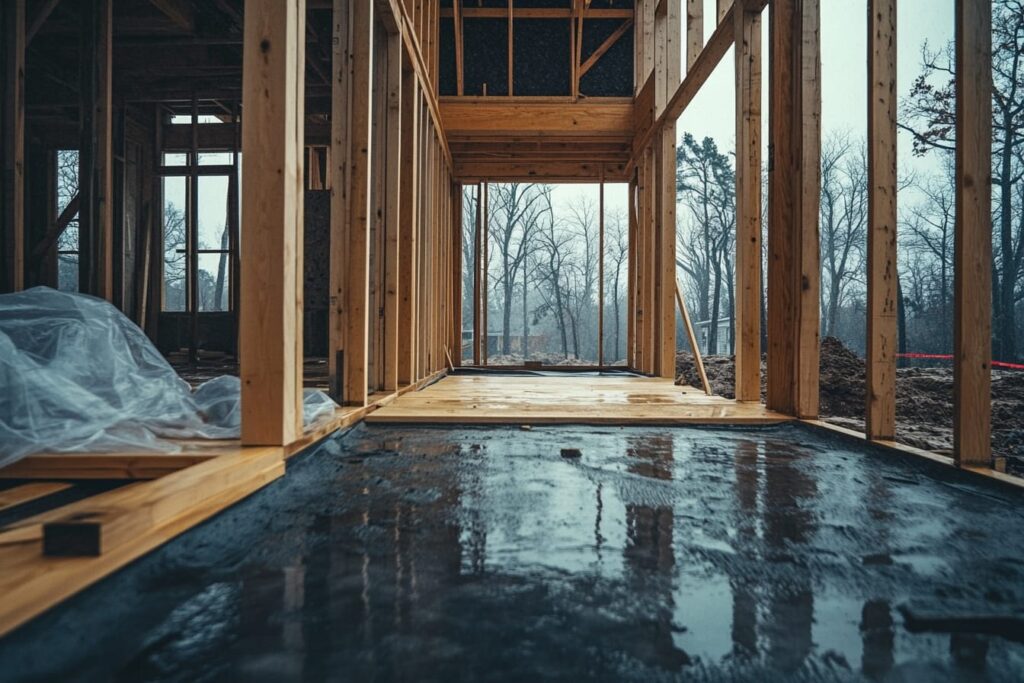
Luxury homes do not usually fail because the design is too ambitious. They fail when the framing scope, sequencing, or site leadership is too ordinary for the level of complexity the house is asking for. That mismatch is what creates rework, delay, and finish problems later.
The most useful way to avoid those risks is to recognize them early. Once the house is framed loosely or inconsistently, the correction path gets expensive quickly.
Commodity Framing Mindset On A Non-Commodity House
One of the most common risks is treating a luxury custom home like a standard production frame. That usually shows up as generic assumptions, vague scope, weak coordination around the hard details, or labour planning that only fits simpler repetitive work.
A high-end custom build needs more judgement than that. It needs a framing package that respects the fact that the house is carrying more structural and finish-sensitive pressure than a basic new-build shell.
Out-Of-Square Work Multiplies Downstream Costs
Luxury homes are less forgiving when the frame drifts. Once the structure is out of square, out of plane, or inconsistent through key openings and feature areas, the project starts paying for it in windows, drywall, stairs, millwork, and finish carpentry.
That is one reason framing accuracy matters so much at this level. The cost of rough correction is usually far lower than the cost of trying to hide or work around the same error once the premium finish package arrives.
Late Structural Coordination Slows Everyone Down
Late coordination is another common risk. If beam pockets, opening sizes, support conditions, or connection details are still being clarified while the framing crew is already moving, the site starts solving design questions during production.
That is rarely efficient. It slows the framer down, creates uncertainty for the builder, and often pushes avoidable pressure into following trades that were counting on a cleaner handoff.
Protection Gaps During Wet Weather Can Create Avoidable Rework
In the Lower Mainland, protection gaps are more than housekeeping issues. They can create real rework when the frame sits exposed longer than expected or when critical areas are not sequenced cleanly toward dry-in.
The point is not that every wet day creates a problem. The point is that a complex custom frame gives moisture more ways to become expensive if the protection plan is too loose for the house and the season.
Questions Builders And Homeowners Should Ask Before Awarding The Framing Scope
A strong framing award starts with the right questions. On a luxury custom home, it is not enough to know that a team can supply labour. You also need to know how they think about complexity, sequencing, protection, and structural follow-through.
Those questions help both builders and homeowners. They make it easier to compare bids fairly and easier to see whether the framing partner understands the actual demands of the house in front of them.
Is The Scope Priced Like A Luxury Custom Home Or Like A Simpler Production Frame?
This is one of the first things to test. Two quotes can look similar until you compare what they assumed about protection, structural coordination, site access, engineered details, and supervision.
If the scope was priced like a simpler house, the number may look attractive early and become stressful later. The better question is whether the estimate fits the real complexity of the design.
How Will The Framing Team Handle Layout, Protection, And Structural Follow-Through?
A good answer should go beyond “we frame houses.” You want to hear how the team thinks about layout control, exposure management, staged sequencing, and what happens when structural details become the pace-setting part of the job.
That kind of answer tells you more than the rate alone. It shows whether the contractor is prepared to lead a custom frame or just to react to it.
What Parts Of The Home Will Put The Most Pressure On The Frame?
This is a useful question because it forces everyone to identify the real pressure points early. On many luxury homes, those are the window-heavy elevations, tall interior volumes, complex stair zones, engineered spans, or irregular exterior geometry.
Once those areas are named clearly, the scope and sequence usually become easier to price, supervise, and build. It is much easier to protect the hard parts of the house when the team has agreed on what they are.
Does The Framing Partner Show Good Site Leadership, Not Just Labour Capacity?
Labour capacity matters, but leadership matters more on a complex custom frame. A team can have enough people and still underperform if the site leadership is thin, the coordination is weak, or the sequencing logic is not strong enough for the design.
That is why it helps to screen for more than capacity. Knowing how to prequalify a carpentry subcontractor exposes scope clarity, planning discipline, and onsite leadership before the award is made.
How Madera Thinks About Framing Luxury Custom Homes
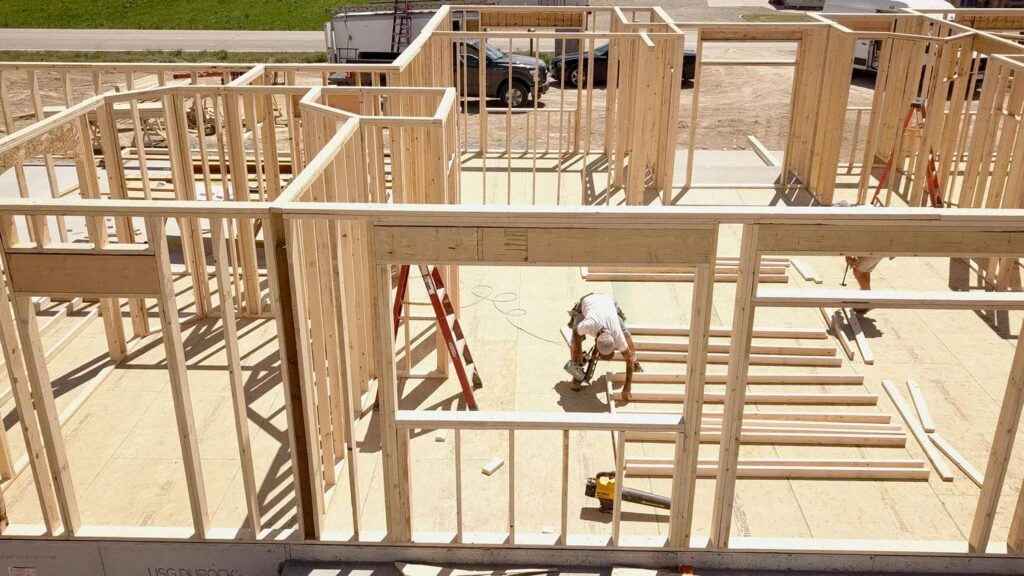
We do not approach a luxury custom home with a generic framing template. We start with the actual drawings, the site conditions, the hard structural areas, and the finish sensitivity of the house. That keeps the framing package tied to the project instead of forcing the project to fit a generic approach.
The goal is a build that stays calm as it gets more detailed. The earlier the framing package is aligned with complexity, the easier it is to keep the rest of the project organized.
Start With The Drawings, The Site, And The Hard Parts Of The House
We start by identifying the parts of the house that will drive the frame hardest. That usually means the large openings, tall walls, engineered interfaces, access constraints, and the areas where the structure and design are most tightly connected.
That early read matters because it makes the framing scope more honest. Instead of discovering the hard parts only when the crew reaches them, the site can plan around them from the beginning.
Match The Crew Plan To Complexity, Access, And Tolerance Expectations
Luxury framing works best when the crew plan fits the house. Madera Projects brings Red Seal carpenter oversight, reliable crews with strong onsite leadership, and clear scopes before work begins so the level of supervision and coordination matches the level of complexity on site.
That helps reduce deficiencies and protect the schedule. It also supports a better working environment for the trades that follow, because the frame is being built with more awareness of what later scopes will need from it.
Protect The Build With Organized Execution And Communication
Luxury framing succeeds when progress is visible and issues are raised early enough to solve cleanly. Organized execution, respectful communication, and a clean site culture all help protect the structure and the finish package that will be built on top of it.
Our completed custom-home builds show the kind of work this approach supports, but the bigger point is that the frame needs to be led in a way that protects the whole build, not just the rough shell stage.
Build A Luxury Custom Home Frame That Stays Clean Into Finishes
Framing a luxury custom home in the Lower Mainland is not just about getting the shell up. It is about giving a complex design the structure, tolerance control, protection, and sequence it needs to stay clean all the way into finishes. The more ambitious the house becomes, the more valuable it is to have a framing package that understands not only structure, but also layout discipline, wet-weather exposure, and the demands of later trades.
Madera Projects helps builders and homeowners through that stage with Red Seal carpenter oversight, strong onsite leadership, clear scopes before work begins, organized job sites, and proactive communication as the work moves. We are fully insured, we respect other trades onsite, and we aim to reduce the kind of downstream problems that usually start with weak framing coordination upstream. To talk through the demands of your build, reach out about our custom home framing services.
Frequently Asked Questions
What Makes Luxury Custom Home Framing Different From Standard Residential Framing?
Luxury custom home framing usually involves larger openings, longer spans, more engineered coordination, tighter tolerances, and more finish-sensitive consequences if the rough frame drifts. The work is not only about structure. It also has to protect how the finished house will read once glazing, stairs, drywall, and millwork are installed.
Why Does Lower Mainland Weather Matter During Framing?
Because protection and dry-in matter more where the frame can spend meaningful time exposed to wet conditions. Metro Vancouver projects warmer, wetter winters and more extreme weather, which is one reason moisture discipline and sequencing deserve attention early on custom-home frames.
Do Luxury Custom Homes Usually Need More Engineered Framing?
Often, yes. Larger openings, longer spans, irregular geometry, and more ambitious layouts usually bring engineered wood, steel interfaces, or more detailed structural coordination into the framing package sooner than they would on a simpler house.
Why Do Framing Tolerances Matter More On High-End Homes?
Because the finish package is usually less forgiving. Stairs, glazing, millwork, ceilings, and finish carpentry all depend on the frame being consistent enough to support tight reveals, straight lines, and clean interfaces. A small rough-framing error can become a much larger finish problem later.
Does Vancouver Follow The Same Framing Code Path As The Rest Of The Lower Mainland?
Not exactly. Outside Vancouver, the Province says BC Codes apply and that projects with building permits applied for on or after March 10, 2025 are subject to the BC Building Code 2024 earthquake requirements. Vancouver says its 2025 Building By-law generally came into effect on September 15, 2025, and that its seismic design provisions need not apply for permits submitted before September 15, 2026, with possible further deferral for certain in-stream projects.
When Should The Framing Contractor Be Brought Into A Custom Home Project?
Early, ideally before layout, opening sizes, sequencing assumptions, and protection planning are fully locked. The earlier the framing team understands the hard parts of the house, the easier it is to price and build the frame honestly.
How Should Builders Compare Framing Quotes For A Luxury Custom Home?
Compare the scope, structural coordination assumptions, protection planning, supervision model, and sequencing logic before comparing the rate alone. A lower number is not necessarily a better number if it was built around a simpler house than the one you are actually constructing.