

Exterior finishing labour is priced best when you start with a loaded labour rate, then adjust labour hours for cladding type, wall height, access, openings, trims, flashings, sequencing, and weather exposure. In other words, the right price comes from the real work in front of the crew, not from a square-foot shortcut that ignores the facade. If you are pricing against live site conditions instead of a generic benchmark, it helps to frame the work through an exterior finishing contractor who carries the broader scope and the coordination around it.
That matters because exterior finishing labour is rarely just “install and move on.” The crew still has to deal with access, staging, weather, openings, substrate readiness, partial releases, and the builder’s sequence. A labour number that ignores those conditions may look competitive in a spreadsheet, but it usually gets corrected on site through delay, extras, or lost margin.
Exterior Finishing Labour Pricing At A Glance
Exterior finishing labour pricing is the process of converting scope, crew cost, and production assumptions into a labour-only price that reflects the real job. That means your number has to account for how the crew will actually work, not just how much wall area appears on the drawings.
| Pricing Input | Why It Matters | What It Usually Changes |
| Loaded Labour Rate | Sets the true cost per paid hour before markup | Base labour cost |
| Cladding Type And Fastening Method | Changes cutting, layout, and install speed | Production hours |
| Height And Access | Slows movement, staging, and workface efficiency | Labour hours per elevation |
| Openings, Trims, And Flashings | Adds detail work and interrupted runs | Labour density |
| Weather Exposure | Reduces productive time and may create stop-start work | Schedule risk and paid hours |
| Crew Mix And Supervision | Changes output, quality, and coordination speed | Actual productivity |
| Material Handling And Site Logistics | Affects time before product reaches the wall | Hidden labour cost |
The quick rule is simple. Square-foot rates can help once the scope has been normalized. But once the facade becomes broken up, detail-heavy, tall, or weather-sensitive, labour pricing usually needs a deeper breakdown by elevation, detail condition, or work phase.
Start With Scope Before You Start Rates

Most exterior labour problems begin before anyone touches a rate sheet. They start when the scope is loose, blended, or assumed. If the scope is not clear, the crew hours will not be clear either.
The fix is to define what this labour package actually includes before you try to price it. Once that is done, the rate and the production assumptions become much easier to defend.
Define What “Exterior Finishing Labour” Includes On This Job
Start by writing down what the crew is expected to install. On one project, exterior finishing labour may mean cladding only. On another, it may also include trims, starter details, flashings, soffits, backing, rain screen components, weather barrier coordination, protection, and deficiency return time. Those differences change labour more than many builders expect.
That is why two quotes can look far apart even when the facade size is similar. One number may cover a narrow install scope on ready walls. Another may include setup, layout, flashing coordination, and cleanup across a more complicated package. Unless the scope is normalized first, the quote comparison will always be misleading.
Separate Labour-Only From Supply-And-Install
Labour-only pricing is cleaner when it stays separate from materials, equipment, and wider package responsibilities. The moment supply, delivery, wastage, hardware, or special equipment are blended into the same number, it becomes harder to see whether you are comparing labour logic or procurement logic.
That separation also makes builder review easier. A labour-only quote lets you isolate production assumptions, crew mix, and supervision without confusing them with product allowances. Engaging a labour-only carpentry subcontractor is the cleanest way to lock that boundary in before award, since the contract scope itself defines where labour responsibility starts and ends.
Clarify Exclusions Before You Assign Hours
Exclusions are where many labour estimates quietly drift off course. If the quote excludes lift coordination, scaffold moves, weather protection, extensive cleanup, material movement beyond a staging zone, or builder-driven resequencing, those exclusions need to be visible before anyone decides the rate is strong.
A clean estimate does not try to hide those assumptions in vague wording. It names them early, then prices the labour around them honestly. That keeps the site from discovering, halfway through the cladding run, that the labour number only worked on a simpler job than the one actually awarded.
Build A Loaded Labour Rate Before You Mark Up The Work
Once the scope is clear, the next step is the labour rate itself. This is where many estimates go wrong because they start with the installer’s wage and stop there. A wage is not a usable labour rate until the employer cost around that wage is added properly.
A loaded labour rate gives you the base cost of a paid hour before markup and profit. Without that base, your labour hours may look careful, but the price still will not hold.
Hourly Wage Is Not The Same As Labour Cost
The wage paid to a crew member is only one part of the labour number. The business still carries payroll burden, supervision, training, small tools, vacation structure, non-productive time, and the coordination cost that keeps the installer working safely and consistently. Pricing from wage alone makes the rate look attractive, but it strips out the real cost of putting that person on site.
This matters even more in exterior finishing because productive wall time is never the full day. Crews spend time unloading, setting up, moving access equipment, dealing with weather, working around other trades, and cleaning up work areas. If your rate assumes every paid hour is fastened product on the wall, the estimate will almost always come up short.
Add Payroll Burden, Statutory Costs, And Employer Overhead
A practical loaded labour rate includes employer-side payroll obligations, plus the overhead that supports field work. That includes the invisible but necessary cost of foreman time, site leadership, hand tools, setup, and the coordination work that keeps the facade moving in the right order. Those items are easy to understate because they are spread across the job instead of tied to one visible task.
CRA payroll guidance explains how employers calculate CPP contributions, EI premiums, and income tax deductions, while BC’s minimum wage rules and minimum daily pay requirements set the floor those calculations sit on top of. That is why a usable labour rate has to start from current employer cost, not from a bare hourly wage copied from an old spreadsheet.
Decide How Travel, Setup, And Non-Productive Time Are Carried
Exterior crews do not start each shift at full production. They travel, unload, attend site meetings, move materials, set up access, review details, and sometimes wait for areas to be released. Those paid hours still belong in the pricing structure, even if they are not easy to measure by square foot.
The cleanest way to handle this is to decide early how much of that time is baked into the loaded rate and how much sits inside the labour-hour forecast. Either approach can work. The mistake is ignoring it altogether and assuming the field will absorb it for free.
Price The Work By Production Drivers, Not Square Foot Alone
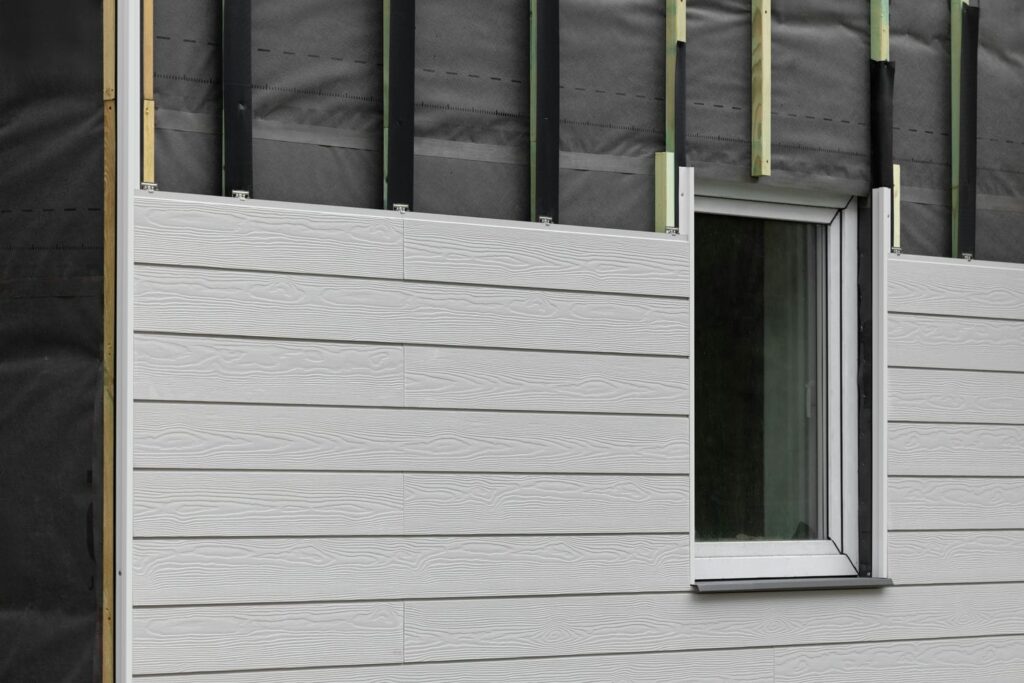
Square footage matters, but it does not control labour by itself. Exterior finishing productivity changes sharply once the wall becomes taller, more detailed, more interrupted, or harder to access. A useful price has to follow those drivers, not just the gross area on the elevation.
This is why experienced estimators do not stop at area takeoff. They study what breaks crew rhythm, what adds setup, and what turns a clean run into a start-stop install.
Cladding Material And Fastening Method
Different systems produce very different labour patterns. Some materials go on in larger, cleaner runs with simpler fastening and fewer cuts. Others need tighter layout, more handling care, more trim coordination, or more exact fastening patterns. Two facades with the same wall area can carry very different labour because the install method is not the same.
The right pricing move is to translate those differences into production assumptions instead of forcing every system into one benchmark. A flat rate may be fine for a familiar, repetitive install. It becomes risky once the material demands tighter sequencing, more detail work, or more time at every transition.
Height, Access, Scaffolding, And Lift Use
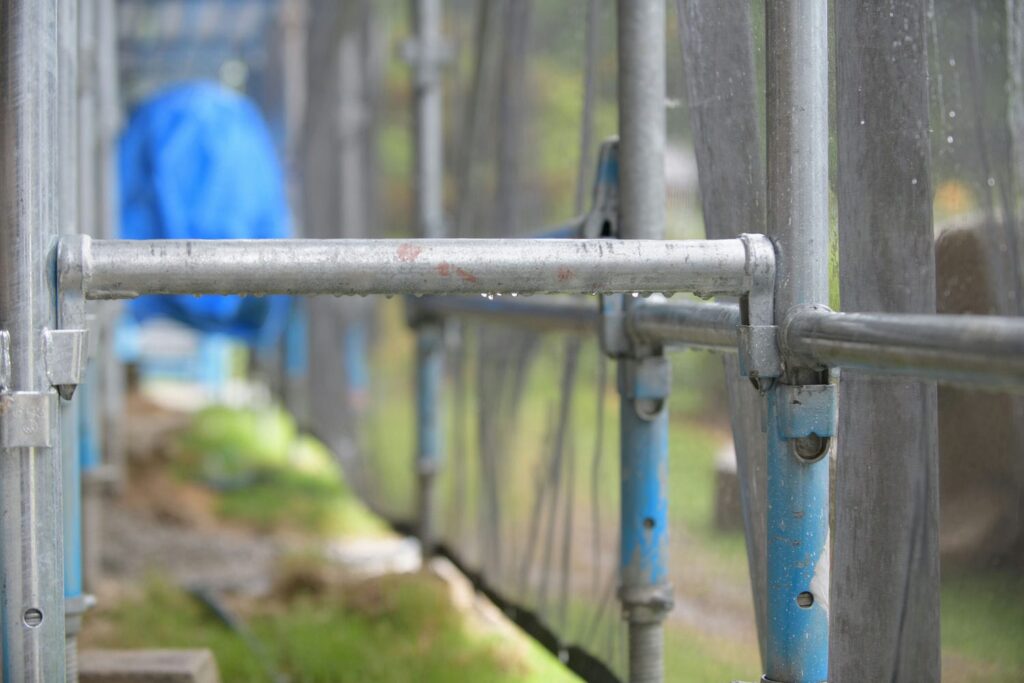
Height changes output long before it changes measured area. Crews work slower when they are moving on lifts, working around scaffold decks, waiting for repositioning, or sharing access windows with other trades. Even a strong crew will produce less if the workface keeps shifting or the access plan keeps interrupting the run.
This is one reason clean-looking labour bids often miss the real job. The quote may assume open access and continuous release, while the site delivers staggered elevations, partial availability, or tight movement around other activities. When that happens, the labour price was never truly built for the site.
Openings, Corners, Trims, And Flashings
This is where square-foot pricing breaks fastest. Windows, doors, outside corners, inside corners, step-backs, soffit interfaces, trim packages, and flashing details all add labour density that gross wall area does not show. The more broken up the facade, the less useful a bare area number becomes.
That is why one elevation can carry far more labour than another even when the square footage looks close. On detail-heavy walls, the work lives in starts, stops, cuts, fits, and interfaces. Good pricing catches that. Weak pricing hides it until the crew is already losing time.
Substrate Readiness And Weather Barrier Coordination
Exterior finishing labour also depends on what sits under the cladding. If the substrate is out, backing is incomplete, openings are not coordinated, or weather barrier details are not ready, the install crew slows down or starts revisiting areas that should have been clean the first time.
That is not a small estimating issue. It is often the difference between a productive run and a stop-start job. When the wall is not ready, exterior finishing becomes a coordination exercise as much as an install exercise, and the labour price has to reflect that risk.
When Unit Rates Work And When They Break Down
Unit rates still have a place. They help teams move quickly, compare options, and budget early. But they only work well when the underlying conditions are stable enough to support a repeatable production assumption.
The problem is not the unit rate itself. The problem is using a benchmark built for a clean facade on a facade that is no longer clean.
Repetitive Walls And Straightforward Elevations
Unit rates work best on repetitive walls with stable access, consistent detailing, and long uninterrupted runs. In those conditions, productivity is easier to predict because the crew sees the same work over and over and loses less time to adjustment. The estimate can stay simple without becoming careless.
That kind of scope usually appears on flatter elevations, cleaner panel patterns, or projects where the builder has released work in a predictable sequence. When those conditions are in place, square-foot pricing can be a practical way to move quickly without losing much accuracy.
Custom Homes, Broken-Up Facades, And Heavy Detail Density
Unit rates become much less reliable once the facade is broken into many small pieces. Custom homes, mixed-material exteriors, layered trim zones, and elevations with heavy opening density tend to carry labour that lives in transitions rather than area. That work is real, but it disappears inside a flat unit rate unless someone deliberately adjusts for it.
This is where section-by-section pricing usually wins. It allows the estimator to assign more realistic hours to the parts of the facade that actually slow the crew down, instead of pretending the whole building installs at the same pace.
Make Allowances And Assumptions Visible
A unit rate is only useful when the assumptions behind it are clear. Does it assume straight walls, full release, normal weather exposure, one mobilization, and builder-ready substrate? Or does it assume partial areas, staged releases, and more return trips? Those assumptions change the labour number even if the rate looks neat on paper.
Visibility matters because it improves quote comparison. A builder can work with a benchmark number if the conditions attached to it are visible. What causes trouble is a polished unit rate with hidden assumptions that do not match the real job.
Exterior Finishing Labour Factors Builders Miss Most
The hardest labour costs to catch are usually the ones that do not look dramatic. They are the minutes spent moving material twice, waiting for an area release, working around weather, or sending a crew back for a partial fix. One by one they seem small. Across the job, they can erase the margin in a hurry.
That is why a serious exterior labour estimate needs to think like the site, not like a clean drawing set. The facade gets built in weather, on access equipment, around other trades, and under schedule pressure.
Weather Exposure, Dry-In Timing, And Lost Days
Exterior finishing is unusually sensitive to weather and moisture management. Rain, wind, wet surfaces, and interrupted dry-in timing can reduce output even on a well-planned job. Sometimes the crew loses the whole day. More often, the crew loses part of the day and the estimate suffers because those partial losses were never priced.
Pricing for weather is less about predicting it and more about acknowledging it as a real labour driver. Understanding how weather delays affect cladding schedules across BC builds is part of why labour budgets need to assume some stop-start friction rather than treating ideal weather as the baseline.
Material Handling And Site Logistics
Material handling adds labour before installation even starts. If deliveries arrive in the wrong sequence, laydown space is tight, or materials have to be moved multiple times to reach the workface, the crew loses productive hours long before fasteners come out. That is one reason site logistics deserve a line in the estimate, not just a note in the handoff meeting.
This issue gets worse on tighter urban sites or multi-phase projects where access zones keep changing. The facade may be simple, but the path to the facade is not. Good pricing sees the difference.
Crew Mix, Supervision, And Learning Curve
Not every labour hour has the same value. A crew with strong lead-hand supervision, consistent installers, and real familiarity with the system will usually move faster and cleaner than a crew that is still learning the product or constantly waiting on direction. That difference affects production, quality, and deficiency time.
This is one reason labour quotes can vary so widely. One subcontractor may be pricing with a seasoned crew and active site leadership. Another may be pricing with a thinner supervision model and more optimistic productivity assumptions. Without that context, the low number can look better than it really is.
Builder-Driven Schedule Changes And Return Trips
Exterior labour often gets underpriced when the estimate assumes clean releases and continuous workflow. In reality, builders may release partial areas, change priorities, delay adjacent work, or ask the crew to leave and return. Every interruption adds remobilization, reorientation, and small inefficiencies that rarely show up in a flat rate.
Return trips are especially expensive because they break rhythm. The crew may only be finishing a small section or deficiency item, but the time to re-enter the area, stage tools, and re-establish workflow is real. A labour price that ignores that pattern is usually depending on luck.
How To Compare Exterior Finishing Labour Quotes Fairly
A fair comparison starts with scope, not price. If two quotes do not cover the same tasks, assumptions, and working conditions, the numbers tell you very little. The lowest price can easily be the least complete price.
This is where builders save time by slowing down for one careful review. A short normalization pass up front is far cheaper than solving scope gaps after the crew is already on site.
Compare Scope Before You Compare Rate
Check what each quote actually includes before you focus on the number. Does one subcontractor carry trims, flashings, soffits, and cleanup while another prices cladding only? Does one include supervision and small coordination tasks while another leaves them out? Those differences matter more than the hourly rate written at the bottom.
Once the scope is aligned, the price discussion gets sharper. Until then, you are not comparing labour efficiency. You are comparing different packages with different risk transfer built into them.
Look For Exclusions, Assumptions, And Productivity Logic
A good labour quote shows how it thinks. It reveals what access conditions were assumed, how weather risk was handled, whether the substrate is expected to be ready, and what level of release continuity the crew needs to hold the number. That logic tells you far more than a polished total.
This is also where vague quotes become dangerous. A number may look competitive only because the assumptions were left unspoken. Once the site no longer matches those hidden assumptions, the labour price stops working and the project starts negotiating around it.
Check Whether The Quote Matches Labour-Only Or Installed Responsibility
Some bids look lean because they are carrying a narrower responsibility model. Others look high because they include tasks the builder assumed sat elsewhere. If you do not separate labour-only from broader installed responsibility, the quote comparison will always be distorted.
The cleanest review is to ask one direct question: what exactly is this crew responsible for from first mobilization to final deficiency pass? Once that answer is clear, the labour number becomes much easier to trust.
Use Prequalification To Catch Weak Pricing Logic Early
Prequalification helps because it tests how a subcontractor thinks before the contract is awarded. It reveals whether the team understands detail density, release sequencing, supervision, and the hidden labour that sits around the install itself. That is often where weak labour pricing shows up first.
If you are comparing numbers that seem far apart, it helps to screen the logic behind them, not just the totals. Knowing how to prequalify a carpentry subcontractor before award gives you fewer surprises during production and a cleaner handoff once the crew is on site.
How Madera Thinks About Exterior Finishing Labour Pricing
We do not start with a generic square-foot number and try to force the job to fit it. We start with the facade, the access plan, the detail density, and the sequence. That gives builders a labour number tied to actual site conditions, which is usually the only kind of number worth trusting.
That approach also makes the project easier to run. When the labour price reflects the real job, the site spends less time debating what should have been included and more time moving the work forward.
Start With Clear Scope And Real Site Conditions
We begin by clarifying what the crew is actually carrying. That means looking at cladding scope, trims, flashings, soffits, access, staging, and the condition the walls will be in when the crew arrives. Clear scope at the start usually prevents the kind of late labour friction that shows up as confusion, extras, or schedule drag.
We also price against the site that exists, not the one everyone hopes for. If access is tight, releases are partial, or the facade is broken up, that should be visible in the labour logic from day one.
Match Crew Planning To Access, Sequencing, And Detail Density
Exterior finishing runs better when crew planning matches the work. Madera Projects brings Red Seal carpenter oversight, reliable crews with strong onsite leadership, and clear scopes before work begins so the labour plan reflects how the facade will actually be built, not how it looks in a simplified takeoff.
That matters because a good labour budget is not only about estimating. It is about assigning the right people, sequencing the work cleanly, and reducing avoidable deficiencies through consistent standards on site. Strong planning and strong execution belong together.
Protect The Labour Budget With Organized Execution And Communication
Accurate pricing only helps if the project is managed in a way that protects it. Clean handoffs, proactive communication, and progress visibility are what keep a realistic labour number from being eroded by preventable site friction. The more organized the workflow, the less labour gets lost to confusion and return trips.
That is part of our process. We focus on clear scopes, organized job sites, strong onsite leadership, and practical communication so builders can see progress early and solve issues before they grow into labour waste.
Build Your Next Exterior Finishing Estimate With Us

Exterior finishing labour is priced well when scope, access, detail density, and weather risk are understood early. It is priced badly when a flat rate is forced onto every facade and the site is left to absorb the difference. The more complex the wall, the more valuable honest labour logic becomes.
Madera Projects helps builders with Red Seal carpenter oversight, reliable crews, strong onsite leadership, clear scopes before work begins, and proactive communication once the work is moving. We are fully insured, we keep organized job sites, and we aim to reduce the kind of closeout issues that usually start with weak coordination upstream. If your next package needs a labour plan built around the real facade rather than a generic rate sheet, our exterior finishing services are designed exactly for that conversation.
Frequently Asked Questions
How Do You Price Exterior Finishing Labour?
Start with a loaded labour rate, then estimate realistic labour hours based on cladding type, access, wall complexity, openings, trims, sequencing, and weather exposure. That gives you a price tied to actual production instead of a generic square-foot shortcut.
What Is A Loaded Labour Rate In Exterior Finishing?
A loaded labour rate is the real employer cost of a paid field hour before markup. It goes beyond wage and includes payroll burden, supervision, small tools, setup time, and other field support costs that make the crew available and productive.
Should Exterior Finishing Labour Be Priced Per Square Foot Or By Crew Hours?
Both methods can work, but they suit different conditions. Square-foot pricing works best on repetitive, normalized elevations. Crew-hour thinking is usually safer on broken-up facades, custom homes, or detail-heavy exteriors where labour lives in transitions more than in wall area.
Why Do Exterior Finishing Labour Quotes Vary So Much?
They usually vary because the scopes are different, the assumptions are different, or the crews are priced with different productivity logic. Access, weather exposure, supervision, trims, openings, and responsibility split all change the labour number quickly.
Does Weather Need To Be Included In Exterior Finishing Labour Pricing?
Yes. Exterior labour is heavily affected by rain, wind, wet surfaces, interrupted dry-in timing, and stop-start workflow. Even when weather does not shut the whole day down, it can still reduce output enough to damage a labour budget that assumed ideal conditions.
Are Scaffolding, Lifts, And Supervision Part Of Labour Pricing?
They can be included, excluded, or carried separately, but they should never be left vague. Builders should know whether those costs sit inside the labour number, beside it, or outside the scope entirely before they compare bids.
How Can Builders Compare Exterior Finishing Labour Bids Fairly?
Normalize the scope and assumptions first. Once you know what each quote includes, excludes, and assumes about access, sequencing, and detail density, the rate comparison becomes much more useful.